
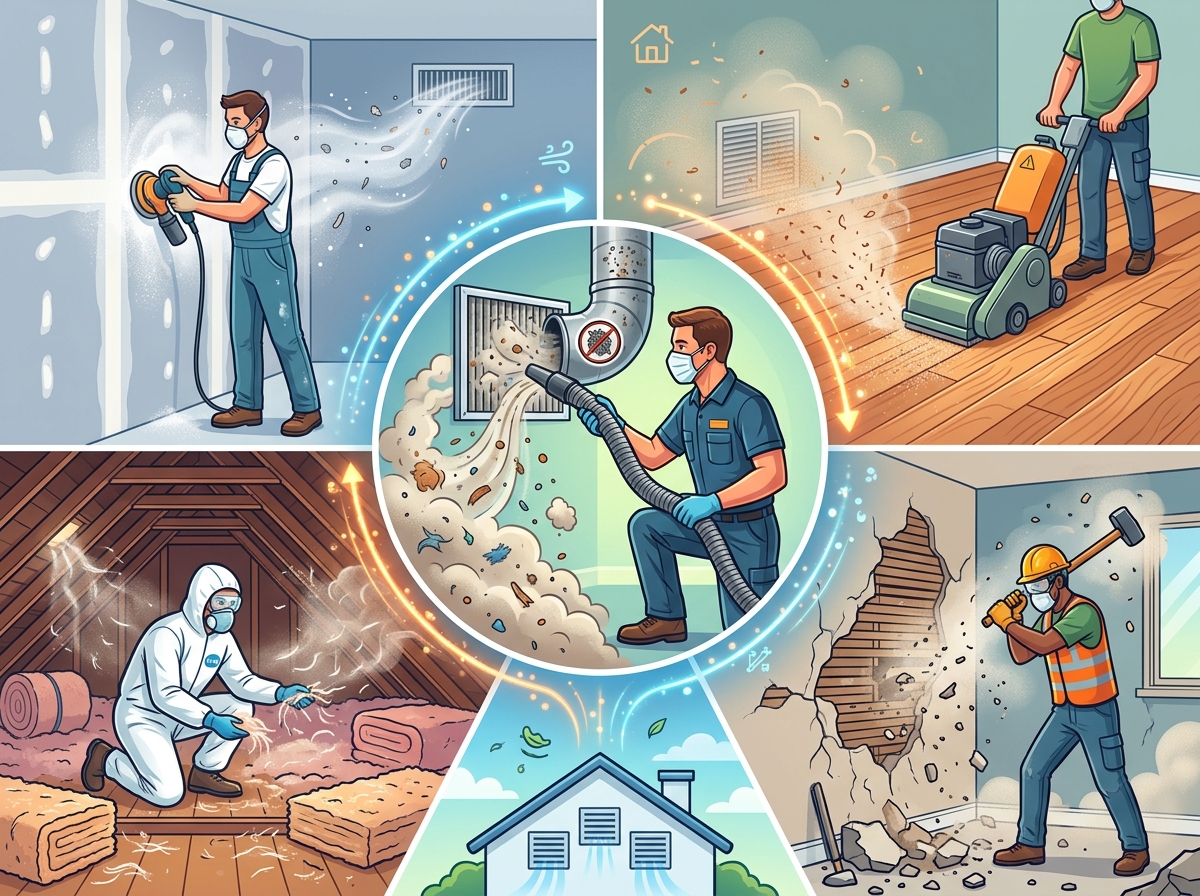
Home upgrades can look clean on the surface while leaving fine debris inside vents and hidden air paths. Certain projects disturb ceiling cavities, crawlspaces, soot, insulation, old dust, and construction grit that ordinary sweeping cannot fully remove. Residents searching for HVAC cleaning near me often discover the need after a project changes how the home smells, feels, or collects dust.
Popcorn Ceiling Removal Can Release Fine Texture Dust
Popcorn ceiling removal creates a powdery mess that drifts through rooms with very little air movement. Scraping old texture can release drywall compound, paint flakes, dust, and aging surface material that settles on floors, furniture, vents, and return grilles. Even careful masking may not stop tiny particles from slipping into nearby openings.
Ceiling work also places debris close to upper registers and attic access points. Once the system runs again, leftover dust can move through air pathways and show up in rooms that were not part of the project. HVAC cleaning can help after ceiling texture removal because the dust is light, stubborn, and easy to recirculate.
Crawlspace Encapsulation Can Disturb Dirt Near Duct Runs
Crawlspace encapsulation often improves moisture control, but the work can stir up old dirt before the space is sealed. Crews may remove debris, level soil, install vapor barriers, seal vents, or repair insulation around ductwork. During that process, particles around duct seams and floor penetrations can become airborne.
Older homes may have duct sections running through crawlspaces where dust and soil have collected for years. If gaps or loose connections exist, those particles may affect indoor airflow. HVAC cleaning in Nashville TN may be considered after encapsulation when homeowners want the air system cleaned once the crawlspace is better controlled.
Fireplace and Chimney Repairs Can Spread Soot Through Rooms
Fireplace projects can release soot, ash, brick dust, and mortar particles. Chimney repairs, firebox work, damper replacement, and hearth updates may disturb residue that has built up over many seasons. Soot is especially noticeable because it is dark, fine, and easy to track through nearby rooms.
Air returns placed near living rooms can pull some of those particles into the HVAC system. Fireplace dust may also cling to vents and create a stale smell when air begins moving. Nashville HVAC cleaning can help remove residue from air passages after the fireplace work is complete and the room has been cleaned.
Pest Exclusion Work Can Shake Debris Around Vents
Pest exclusion may involve sealing gaps, removing nesting material, repairing screens, or cleaning areas where animals entered attics, crawlspaces, or wall cavities. This work can disturb droppings, nesting fibers, insulation fragments, and dust near duct lines. Any contaminated material should be handled carefully before duct cleaning is considered. Sanitation and exclusion should happen first so the source is corrected. Afterward, HVAC cleaning may help address particles that entered returns, vents, or accessible duct sections. Homeowners comparing Nashville HVAC cleaning services should mention any pest-related work so technicians understand the condition of the home.
Recessed Lighting Installs Can Open Ceiling Cavities
Recessed lighting installation often requires cutting holes in ceilings, fishing wires, and working above finished rooms. Those openings can release attic dust, insulation fibers, sawdust, and drywall particles. The mess may look minor below the ceiling, but the nearby HVAC system can still pull in fine material. Lighting work also happens near ceiling registers in many homes. If installers cut close to supply vents, debris can fall near the boot where ductwork connects to the room. HVAC cleaning near me becomes a common search after homeowners notice dust blowing from vents following electrical upgrades.
Garage Conversions Can Introduce Stored Debris and Sawdust
Garage conversions turn rough storage areas into livable space, and that change usually creates a long list of dusty tasks. Framing, wall finishing, insulation, trim work, and HVAC tie-ins can release sawdust and construction particles. Stored items may also shed dust before they are moved out. New duct runs or vents added to the converted space must connect cleanly to the existing system. If the project disturbs old garage dust, the new room can start with dirty airflow before anyone moves furniture in. HVAC cleaning can support a cleaner finish after the conversion work is complete.
Masonry or Concrete Cutting Can Leave Grit in the Air
Masonry and concrete work creates heavier grit than many indoor projects. Cutting brick, drilling block, grinding concrete, or repairing steps near entry points can send mineral dust into the home. Those particles may settle quickly, but smaller material can still reach vents and returns.
Protective barriers reduce the spread, yet doors opening and closing can carry grit into living areas. Filters may catch part of the dust, but they cannot remove debris already inside the duct system. HVAC cleaning in Nashville TN may be useful after masonry work when gritty dust keeps appearing on nearby surfaces.
HVAC Equipment Replacement Can Loosen Old System Buildup
HVAC replacement can disturb dust inside closets, mechanical rooms, plenums, and old duct connections. Removing aging equipment may shake loose debris that collected around the blower area, filter slot, return box, or supply connection. New equipment can move air more strongly, which may expose buildup that went unnoticed before.
Mr B gives homeowners a clearer way to connect hidden project debris with the need for HVAC cleaning once the work is done. Whether the job involved ceiling texture removal, crawlspace sealing, fireplace updates, lighting installation, garage conversion, masonry cutting, or HVAC equipment replacement, Mr B can help address leftover buildup inside the home’s air pathways.




Leave a Reply