
Galantine represents one of classical French cuisine’s most impressive presentations. This deboned, stuffed, and poached meat creation showcases culinary artistry through intricate layering techniques. Advanced cooks can elevate their galantine skills by mastering sophisticated stuffing patterns that create stunning cross-sections.
Understanding Galantine Fundamentals
Galantine traditionally uses poultry deboned completely while keeping the skin intact. The bird becomes a canvas for creating beautiful internal patterns. Chefs fill the flattened meat with forcemeat, vegetables, and garnishes arranged in precise layers.
The technique dates back to medieval European cuisine. However, modern interpretations allow creative freedom while respecting traditional methods. Therefore, understanding basic construction before attempting advanced techniques proves essential.
Successful galantine requires careful planning and precise execution. Additionally, temperature control during poaching ensures proper cooking without breaking delicate layers. The final product should slice cleanly, revealing colorful internal designs.
Essential Tools for Advanced Layering
Sharp deboning knives make removing bones without tearing skin possible. A meat mallet helps achieve uniform thickness across the entire surface. Additionally, butcher’s twine and cheesecloth secure the roll during cooking.
Piping bags with various tips create precise forcemeat applications. Offset spatulas spread thin, even layers of stuffing. Moreover, instant-read thermometers ensure safe internal temperatures without overcooking.
Large stockpots accommodate rolled galantines for poaching. Roasting pans work for oven-poached versions requiring consistent heat distribution. Furthermore, sharp slicing knives produce clean cuts showcasing internal patterns.
Creating the Perfect Forcemeat Base
Forcemeat forms the foundation of galantine stuffing layers. This ground meat mixture binds ingredients together while adding richness and flavor. Traditional recipes combine pork, veal, and chicken liver with cream and eggs.
Processing ingredients to proper texture determines final results. Pulse meat in a food processor until smooth but not pasty. Additionally, incorporating cream gradually prevents separation during cooking.
Seasoning forcemeat generously compensates for dilution from other ingredients. Salt, white pepper, and quatre épices provide classic flavoring. However, modern variations include herbs, citrus zest, or truffle paste for contemporary touches.
Testing forcemeat consistency before assembly prevents disappointment. Poach a small portion and taste for seasoning and texture. Therefore, adjustments become possible before committing to the full galantine.
Spiral Layer Technique
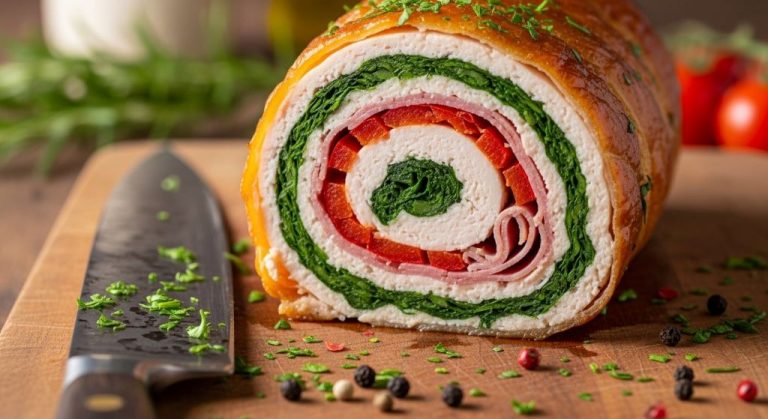
The spiral method creates dramatic circular patterns in each slice. Spread forcemeat evenly across the flattened meat, leaving a border around edges. Layer contrasting ingredients in horizontal strips across the surface.
Place bright vegetables like blanched carrots, green beans, or roasted red peppers in parallel lines. Additionally, strips of cooked ham or tongue add protein layers. Arrange ingredients with color contrast in mind for visual impact.
Roll the galantine tightly from one short end, maintaining even pressure. The internal ingredients spiral around the center as the roll forms. Moreover, securing with twine at regular intervals maintains shape during cooking.
This technique works exceptionally well with chicken or turkey galantines. The spiral reveals itself beautifully when sliced into half-inch rounds. Furthermore, the method allows creative color combinations and ingredient pairings.
Mosaic Pattern Layering
Mosaic layering creates checkerboard or geometric patterns within the galantine. This advanced technique requires precise cutting and arrangement of ingredients. The results produce stunning cross-sections resembling stained glass windows.
Cut cooked vegetables and meats into uniform squares or rectangles. Arrange these pieces in alternating patterns on the forcemeat base. Additionally, using a thin forcemeat layer between ingredient rows helps bind everything together.
Popular ingredients include pistachio nuts, diced ham, tongue, foie gras, and colorful vegetables. Each component should contrast in color with adjacent pieces. Therefore, planning the pattern before assembly ensures successful execution.
This technique demands patience and steady hands. However, the impressive visual results justify the extra effort. According to Serious Eats, professional chefs often use mosaic patterns for competition presentations.

Stripe Layer Method
Vertical stripe patterns create bold visual statements in galantine slices. This technique involves layering long, thin ingredients parallel to the rolling direction. When sliced, each piece displays straight lines of contrasting colors.
Blanch vegetables like asparagus, carrots, or leeks until tender but still vibrant. Allow them to cool completely before incorporating into the galantine. Additionally, cutting vegetables into uniform lengths ensures consistent appearance throughout.
Spread a thin forcemeat layer on the flattened meat. Place vegetable strips lengthwise in tight rows, alternating colors. Moreover, adding another forcemeat layer over vegetables secures them during rolling.
The stripe method works beautifully with pork loin galantines. Duck breast also provides excellent results with this pattern. Furthermore, this technique proves easier than mosaic patterns while still creating impressive presentations.
Concentric Circle Technique
Concentric circles produce bullseye patterns in galantine cross-sections. This method requires cylindrical ingredients or carefully rolled components. The technique creates focal points that draw the eye inward.
Start by forming a cylinder of one ingredient in the center. Wrap this core with a thin forcemeat layer, then add the next component. Additionally, alternating colors between layers enhances the circular effect.
Asparagus bundles make excellent center cores. Wrap them with thin prosciutto slices, then forcemeat, then julienned vegetables. Moreover, continuing this layering creates multiple rings radiating outward.
This technique challenges even experienced cooks. However, the dramatic presentation rewards the effort invested. Therefore, practicing with less expensive ingredients before attempting luxury components makes sense.
Color Theory in Galantine Design
Understanding color combinations elevates galantine presentation significantly. Green vegetables contrast beautifully against pink meats and white forcemeat. Additionally, orange carrots provide vibrant pops against darker ingredients.
Natural food colors offer better visual appeal than artificial dyes. Spinach added to forcemeat creates green layers. Moreover, beet juice produces pink hues without artificial additives.
Avoiding muddy color combinations requires careful planning. Keep complementary colors adjacent rather than mixing them in forcemeat. Furthermore, testing color combinations on a small scale prevents disappointing results.
Professional chefs often sketch their intended patterns before beginning. This planning ensures balanced color distribution throughout the galantine. Therefore, taking time to visualize results improves final outcomes.
Temperature Control During Assembly
Working with cold ingredients maintains distinct layers during construction. Warm forcemeat spreads unevenly and may cause ingredients to shift. Additionally, chilled components handle more easily without falling apart.
Keep all prepared ingredients refrigerated until needed. Work quickly during assembly to prevent warming. Moreover, returning the assembled galantine to refrigeration before poaching helps set the shape.
Room temperature ingredients can blur layer definitions during cooking. Therefore, maintaining cold temperatures throughout preparation proves essential. Professional kitchens often work in temperature-controlled environments for this reason.
Poaching Techniques for Perfect Results
Gentle poaching preserves delicate layer structures within galantines. Water temperature should remain between 160-180 degrees Fahrenheit. Additionally, using cheesecloth wrapping protects the exterior during cooking.
Stock provides superior flavor compared to plain water. Add aromatics like onions, carrots, celery, and herbs to the poaching liquid. Moreover, these ingredients infuse subtle flavors into the galantine during cooking.
Monitoring internal temperature prevents overcooking while ensuring food safety. Chicken galantines require 165 degrees Fahrenheit internal temperature. Furthermore, removing the galantine promptly prevents texture deterioration.
Cooling galantines properly sets the layers for clean slicing. Press the roll gently while cooling to compact layers. Therefore, wrapping tightly and refrigerating overnight produces optimal results.
Advanced Binding Techniques
Transglutaminase, commonly called meat glue, strengthens layer adhesion in complex galantines. This enzyme bonds proteins together, creating seamless connections between components. Additionally, small amounts prove highly effective without affecting flavor.
Sprinkle transglutaminase lightly between layers during assembly. The enzyme activates during cooking, forming strong bonds. However, using sparingly prevents overly firm textures that slice poorly.
Traditional binders like eggs and gelatin also improve layer stability. Brushing thin egg wash between forcemeat and other ingredients helps adhesion. Moreover, gelatin added to forcemeat creates firmer textures when chilled.
According to The New York Times Cooking, proper binding techniques separate amateur attempts from professional-quality galantines.
Presentation and Serving Suggestions
Slicing galantines requires extremely sharp knives for clean cuts. Wipe the blade between slices to maintain pattern clarity. Additionally, slicing at room temperature produces better results than cutting cold galantine.
Arrange slices slightly overlapping on serving platters to showcase internal patterns. Garnish with fresh herbs and edible flowers for elegant presentations. Moreover, accompanying sauces should complement rather than overpower delicate flavors.
Galantine works beautifully for buffets since it serves well at room temperature. The impressive appearance draws attention on display tables. Furthermore, pre-sliced portions simplify service during events.
Troubleshooting Common Layer Problems
Blurred layers often result from insufficient chilling before cooking. Additionally, overly warm poaching liquid can cause ingredients to shift during cooking. Therefore, maintaining proper temperatures throughout preparation and cooking proves crucial.
Uneven thickness in the meat base creates irregular layer distribution. Pounding the meat to uniform thickness prevents this problem. Moreover, careful attention during rolling ensures even ingredient distribution.
Layers separating during slicing indicate inadequate binding between components. Using appropriate binding agents and proper rolling techniques prevents separation. Furthermore, allowing adequate cooling time helps layers set properly.
Conclusion
Mastering advanced galantine stuffing layer techniques elevates this classic preparation into culinary artistry. Spiral, mosaic, stripe, and concentric circle methods each create distinctive visual effects. Therefore, understanding color theory, temperature control, and binding techniques ensures successful execution. Practice with less expensive ingredients before attempting luxury components. Additionally, proper poaching and cooling techniques preserve intricate patterns for impressive presentations. These skills transform simple stuffed meat preparations into showstopping centerpieces worthy of special occasions.
Frequently Asked Questions
What is the difference between galantine and ballotine?
Galantine uses deboned meat rolled with stuffing and poached in stock, then served cold. Ballotine follows similar construction but typically gets roasted and served hot. Both showcase internal stuffing layers when sliced.
How long does galantine last in the refrigerator?
Properly prepared and stored galantine lasts 4-5 days refrigerated in airtight containers. The poaching process and tight wrapping help preserve freshness. However, consuming within 3 days ensures optimal texture and flavor.
Can I freeze galantine after cooking?
Yes, cooked galantine freezes well for up to 2 months when wrapped tightly in plastic and foil. Thaw slowly in the refrigerator before slicing. However, some texture changes may occur after freezing and thawing.
What meats work best for galantine besides chicken?
Turkey, duck, pork loin, and fish all work excellently for galantine preparation. Each protein requires slight technique adjustments but follows the same basic layering principles. Seafood galantines require gentler handling and shorter cooking times.
Do I need special equipment to make advanced galantine?
Basic kitchen tools suffice for simple galantines, but advanced patterns benefit from piping bags, food processors, and meat mallets. Sharp knives for deboning and slicing prove essential. Additionally, cheesecloth and butcher’s twine help during cooking and shaping.
Related Topics:
Valentine’s Day Party Ideas Inspired by Cozy Cafe Aesthetics











+ There are no comments
Add yours