
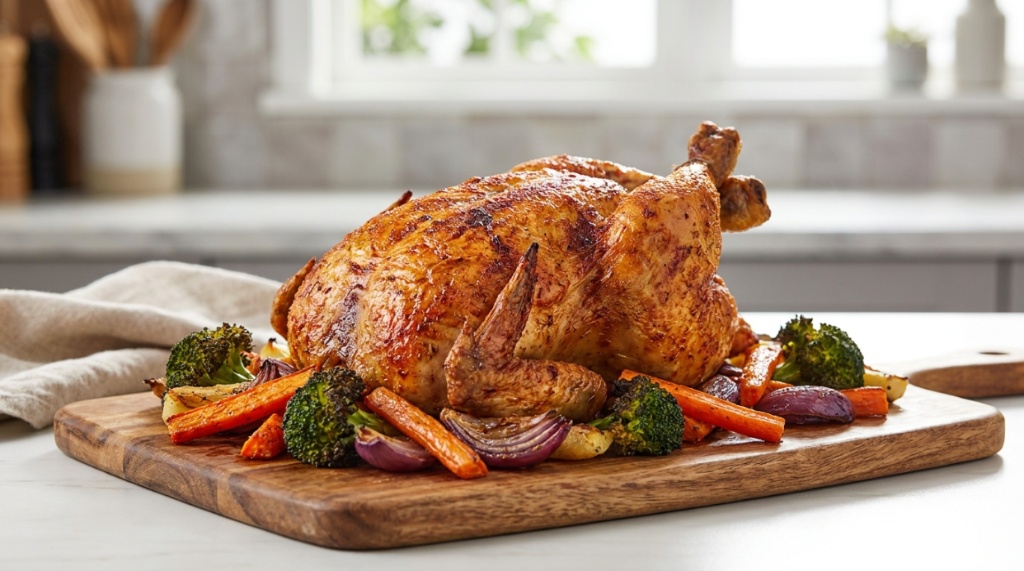
Deep frying a batch of chicken wings requires 4–6 cups of oil containing 7,680–11,520 calories, while an air fryer achieves comparable crispiness using one tablespoon containing 120 calories, representing a 98% fat reduction from the cooking medium alone. Cooking healthier meals with smart cooking appliances like air fryer ovens isn’t about deprivation or flavorless food — it’s about using rapid hot air circulation and precision temperature control to achieve the textures and flavors of traditional high-fat cooking methods while dramatically reducing added oils, preserving nutrients through faster cooking, and eliminating the harmful compounds that form during deep frying. A smart air fryer oven creates healthy meals by circulating superheated air (up to 450°F) at high speed around food—producing crispy Maillard reaction browning on surfaces without submerging food in fat, while connected technology monitors doneness to prevent the overcooking that destroys nutrients and creates carcinogenic compounds. The frustration health-conscious cooks face? They assume healthy cooking means sacrificing the crispy, browned, satisfying textures that make food enjoyable. Air fryer technology eliminates this compromise — and this guide shows exactly how to use healthy cooking appliances to create meals that are genuinely both nutritious and delicious.
How Does Air Frying Reduce Fat and Calories?
Air frying reduces fat content by 70–80% compared to deep frying because it uses rapid hot air to create surface crispiness instead of immersing food in oil—with most recipes requiring only a light coating or spray of oil rather than cups of frying fat.
Fat reduction data by food type:
| Food | Deep-Fried (fat/calories) | Air-Fried (fat/calories) | Reduction |
|---|---|---|---|
| French fries (serving) | 17g fat / 365 cal | 3 g fat / 150 cal | 82% less fat |
| Chicken wings (6 pieces) | 44g fat / 580 cal | 12g fat / 320 cal | 73% less fat |
| Breaded fish fillet | 18g fat / 350 cal | 5g fat / 190 cal | 72% less fat |
| Onion rings (serving) | 16g fat / 280 cal | 4 g fat / 130 cal | 75% less fat |
| Mozzarella sticks (4 pieces) | 20g fat / 330 cal | 7 g fat / 200 cal | 65% less fat |
The science behind the reduction: deep frying submerges food in 350–375°F oil. The food’s surface moisture evaporates, and oil replaces it—meaning deep-fried food literally absorbs cooking fat into its structure. Air frying achieves similar surface dehydration (creating crispiness) through hot air evaporation without providing oil as the replacement medium. The small amount of oil sprayed on surfaces facilitates browning but doesn’t penetrate the food’s interior the way submersion frying does.
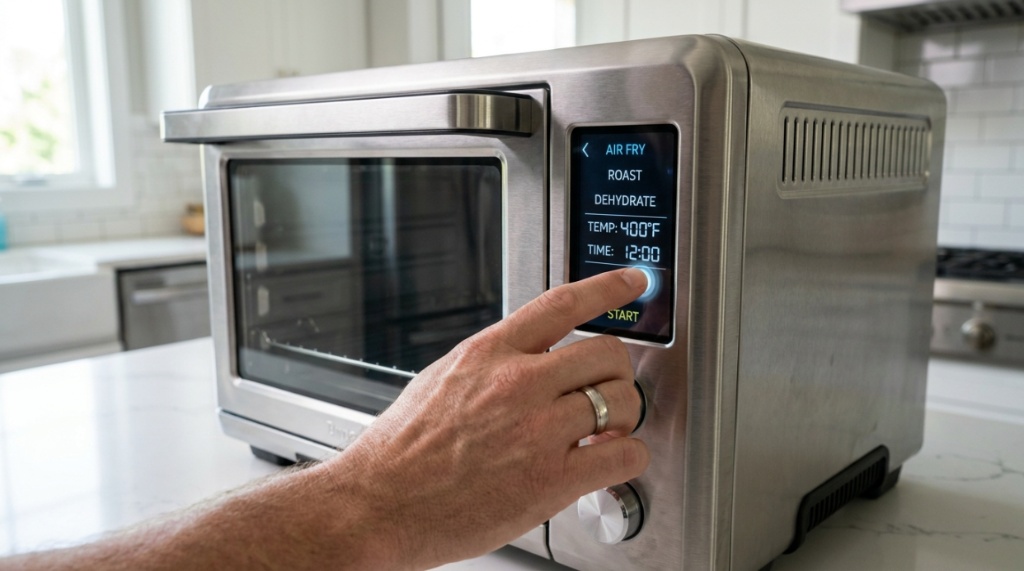
Does Air Frying Preserve More Nutrients Than Other Cooking Methods?
Air frying preserves more heat-sensitive nutrients (vitamins C and B-complex and antioxidants) than deep frying and prolonged oven cooking because shorter cooking times at optimal temperatures reduce the thermal degradation that destroys these compounds.
Nutrient preservation comparison:
- Vitamin C retention: Air frying retains 20–30% more vitamin C than deep frying because a shorter cook time reduces thermal exposure. Deep frying’s prolonged high-temperature oil immersion degrades vitamin C faster than dry heat at the same temperature.
- B-vitamin preservation: B vitamins (B6, folate, thiamine) are water-soluble and heat-sensitive. Air frying’s dry-heat method prevents the water-based nutrient leaching that boiling causes, while shorter cook times reduce thermal breakdown compared to traditional roasting.
- Antioxidant retention: Vegetables air-fried for 12–15 minutes retain more polyphenols and carotenoids than the same vegetables roasted for 30–40 minutes in a traditional oven. Time at temperature is the primary destruction factor for antioxidants.
- Protein quality maintenance: Meat proteins denature (become less digestible) when overcooked. Smart air fryer ovens with temperature probes prevent overcooking precisely, maintaining optimal protein structure at target doneness rather than continuing to degrade beyond the ideal point.
Research context: A 2019 study published in the Journal of Food Science found that air-fried vegetables retained significantly higher levels of vitamin C and phenolic compounds compared to deep-fried equivalents—primarily attributed to the absence of oil oxidation and shorter cooking duration. The smart element (temperature precision, auto-shutoff) further enhances this advantage by preventing the overcooking that manual timing often produces.
What Healthy Cooking Techniques Work Best in a Smart Air Fryer Oven?
The healthiest air fryer oven techniques are oil-spray roasting (minimal fat, maximum browning); temperature-probe protein cooking (prevents overcooking that creates harmful compounds); vegetable dehydrating (preserves nutrients for healthy snacking); and rapid high-heat cooking that seals in moisture without added fats.
Technique breakdown:
- Oil-spray roasting (healthiest everyday method): Lightly mist vegetables or proteins with olive oil spray (2–5 calories per spray vs. tablespoon pour at 120 calories). Season liberally with herbs and spices. Air fry at 380–400°F for 12–18 minutes. Result: crispy, browned, flavorful food with 90%+ less oil than pan-frying.
- Naked air frying (zero added fat): Many foods air fry beautifully with zero oil, including chicken thighs (skin provides natural fat), salmon (natural oils self-baste), and sweet potatoes (high sugar content creates browning without oil). Natural fats within the food provide the necessary browning medium.
- Herb-crust technique (flavor without fat): Coat proteins in herb mixtures (rosemary, thyme, garlic, smoked paprika) with a light egg white wash. Air fry to create a crunchy herb crust without breadcrumbs or oil. Protein-forward, fiber-rich, zero-guilt coating.
- Dehydrating for nutrient-dense snacks: Set oven to 130–170°F with fan circulation for 4–8 hours. Create kale chips, dried fruit leather, beef jerky, and vegetable crisps without the added sugars, oils, and preservatives that commercial snacks contain.
- Precision protein cooking: Use an internal temperature probe to cook chicken to exactly 165°F, salmon to 125°F, and steak to your preferred doneness. This prevents the overcooking that creates heterocyclic amines (HCAs)—potentially carcinogenic compounds formed when meat is charred or overcooked at high temperatures.
How Do Smart Features Support Healthier Cooking Specifically?
Smart features support healthier cooking through precision temperature control that prevents carcinogen-forming overcooking, guided programs that teach proper healthy cooking techniques, and nutritional recipe libraries that automatically configure the oven for reduced-fat cooking methods.
Smart features with health benefits:
- Temperature probe preventing HCA/PAH formation: Heterocyclic amines (HCAs) and polycyclic aromatic hydrocarbons (PAHs) — compounds linked to cancer risk — form primarily when meat is charred or cooked significantly beyond target temperature. A smart probe that stops cooking at the exact target temperature prevents the overcooking that triggers these compounds. This is a genuine health protection feature, not just a quality-of-life improvement.
- Guided healthy recipe programs: Apps from brands like Breville (ChefSteps), Cosori (VeSync), and Ninja include recipe categories specifically organized for healthy/low-fat cooking. These programs configure time and temperature for optimal results without the trial-and-error that leads to either overcooking (dry, nutrient-depleted food) or undercooking (safety risk).
- Portion-aware cooking: Smart ovens that calculate time based on food weight prevent the common error of applying a 4-serving recipe’s time to a 2-serving quantity—which overcooks smaller portions, reducing both quality and nutritional value.
- Nutritional tracking integration: Some smart oven apps integrate with nutrition tracking platforms (MyFitnessPal, Apple Health)—allowing you to log meals with accurate calorie data based on actual cooking methods rather than generic database entries that may assume deep-frying preparation.
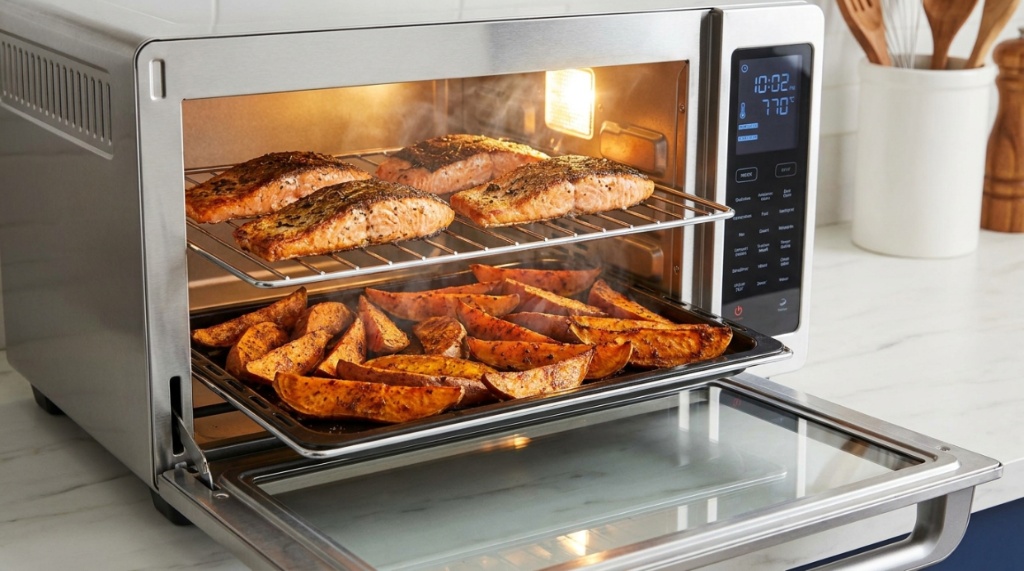
What Are the Healthiest Foods to Cook in a Smart Air Fryer Oven?
The healthiest air fryer oven foods include vegetables roasted to caramelized perfection without oil, lean proteins cooked to exact doneness, whole grains crisped into snacks, and traditionally deep-fried foods recreated with 70–80% less fat.
Healthy food category recommendations:
- Vegetables (highest health impact): Brussels sprouts, broccoli, cauliflower, sweet potatoes, zucchini, bell peppers. Air frying caramelizes natural sugars without added oil—making vegetables taste restaurant quality and encouraging higher consumption. A household that air-fries vegetables daily genuinely eats more vegetables than one that only boils or steams them.
- Lean proteins: Chicken breast, turkey tenderloin, fish fillets, shrimp, and tofu. Air frying seals the exterior quickly (retaining moisture) without the fat absorption of pan-frying. Smart probe ensures perfect doneness — no dry, overcooked protein.
- Healthy snack alternatives: Kale chips (3 minutes at 375°F), chickpea crunchies (15 minutes at 390°F), apple chips (dehydrate at 150°F for 4 hours), zucchini chips (10 minutes at 370°F). Replace processed packaged snacks with whole-food alternatives made in minutes.
- Healthy remakes of comfort food: Air-fried “fried” chicken (75% less fat), crispy fish tacos (no deep fryer needed), sweet potato fries (3g fat instead of 17g), crispy tofu (zero oil, perfect texture). The air fryer enables eating foods you love without the health costs traditional preparation demands.
Does Air Frying Produce Any Harmful Compounds?
Air frying produces significantly fewer harmful compounds than deep frying—reducing acrylamide formation by up to 90% in starchy foods and eliminating the oil oxidation byproducts that deep frying generates—though very high temperatures (above 400°F) on starchy foods still warrant attention.
Compound comparison:
- Acrylamide (starchy food concern): Forms when starchy foods (potatoes and bread) cook above 250°F. A 2015 study in the Journal of Food Science found air frying reduces acrylamide by up to 90% compared to deep frying—primarily because air-fried food absorbs less oil, and acrylamide formation accelerates in oil-mediated cooking. To minimize this, cook starchy foods at 360–380°F rather than 400°F+, and avoid blackened/charred surfaces.
- HCAs and PAHs (protein concern): Form when meat is charred or cooked at extreme temperatures for extended periods. Air frying at recommended temperatures (350–400°F) with smart auto-shutoff prevents the charring that triggers these compounds. The risk increases only when users override smart programs to cook at maximum temperature until burning occurs.
- Oil oxidation products (eliminated): Deep frying generates aldehydes, peroxides, and other oxidation products as cooking oil degrades at high temperatures. Air frying eliminates this entirely—no oil bath means zero oil-oxidation byproduct formation.
- Advanced glycation end products (AGEs): Form during browning reactions. Present in any high-heat cooking (including air frying) but at lower levels than deep frying due to reduced fat mediation. Manageable by moderating the browning level—cooking to golden rather than dark brown.
Overall health verdict: air frying is measurably healthier than deep frying and comparable to or slightly healthier than traditional oven roasting for most foods. It’s not a zero-risk cooking method, but it dramatically reduces the highest-concern compounds associated with fried food consumption.
How Do You Transition to Healthier Cooking With an Air Fryer Oven?
Transition gradually by replacing one deep-fried or heavily oiled meal per day with an air-fried version—starting with foods that taste most similar (fries, wings, and roasted vegetables) to build confidence that healthy can genuinely equal delicious before eliminating less obvious high-fat cooking habits.
Progressive transition plan:
- Week 1–2 (swap the obvious): Replace deep-fried foods with air-fried versions. French fries, chicken nuggets, fish sticks, wings. These produce near-identical results with dramatically less fat — the easiest wins that build confidence in the technology.
- Week 3–4 (upgrade daily proteins): Switch from pan-fried proteins (chicken in oil, fish in butter) to air-fried versions with oil spray only. Use the temperature probe to achieve perfect doneness without drying—proving that healthy doesn’t mean sacrificing juiciness.
- Week 5–6 (vegetable revolution): Air-roast vegetables for every dinner. Caramelized Brussels sprouts, crispy broccoli, roasted sweet potatoes. Make vegetables the most delicious part of the plate rather than an afterthought boiled into blandness.
- Week 7–8 (snack transformation): Replace packaged snacks with air-fried alternatives. Homemade kale chips, chickpea crisps, and dehydrated fruit. Control every ingredient—eliminating hidden sugars, preservatives, and excess sodium.
Psychological key: don’t frame this as a restriction. Frame it as upgrading to better-tasting, better-textured food that happens to also be dramatically healthier. When air-fried sweet potato fries taste better than fast-food alternatives, the health benefit comes free without a willpower cost.
If you want to take your culinary skills a step further, the appliance isn’t just for basic weekday dinners. It also handles intricate, gourmet recipes flawlessly. For instance, you can effortlessly prep and roast a traditional Galantine Food Advanced Stuffing recipe, achieving a perfectly crisp outer crust while keeping the rich, savory filling incredibly moist.
Conclusion
Smart air fryer ovens represent the rare kitchen technology that genuinely makes healthy cooking easier, faster, and more delicious simultaneously. The 70–80% fat reduction from air frying versus deep frying, combined with preserved nutrients from shorter cooking times, reduced harmful compound formation, and precision temperature control that prevents overcooking—these aren’t marketing claims. They’re measurable health improvements backed by food science research.
The transition to healthier cooking doesn’t require willpower when the technology produces food that tastes as good or better than the unhealthy versions. Start with the obvious swaps (fries, wings, nuggets), expand to daily proteins and vegetables, and build a cooking routine where smart cooking appliances handle the precision while you enjoy the results. Healthy eating isn’t about sacrifice—with the right tools, it’s about making the nutritious choice also be the delicious, convenient, and satisfying choice every single meal.
Frequently Asked Questions
Is air-fried food actually healthy or just “less unhealthy”?
Air-fried food is genuinely healthy when starting with nutritious ingredients (vegetables, lean proteins, and whole foods). The cooking method itself doesn’t add harmful elements — it simply crisps and browns through dry heat and minimal oil. A plate of air-roasted vegetables and herb-crusted salmon is objectively healthy by any nutritional standard. The “less unhealthy” label applies specifically to air-fried versions of traditionally unhealthy foods (fries, wings), which are improved but remain calorie-dense snack foods.
How much oil do you actually need in an air fryer oven?
Most foods need 1–2 teaspoons (5–10 ml) of oil via spray application—or zero oil if the food contains natural fats (chicken skin, salmon, or fatty fish). This translates to 40–80 calories from oil per serving versus 300–500+ calories from deep frying the same food. Some vegetables (mushrooms, tomatoes, and bell peppers) air-fry perfectly with no oil at all due to their natural moisture content.
Can you cook frozen foods healthily in an air fryer oven?
Yes—frozen foods air fry directly without added oil, often producing results superior to package-instruction oven-baking. Frozen fries, nuggets, fish fillets, and vegetables cook from frozen in 12–18 minutes with crispy results and no additional fat needed. The pre-applied oil on frozen foods is sufficient for air-frying browning. Choose frozen foods with minimal ingredient lists for maximum health benefits.
Does air frying destroy omega-3 fatty acids in fish?
Air frying preserves omega-3 fatty acids better than deep frying. A study in food chemistry found that deep frying reduced omega-3 content in fish by 70–85% (oils leach out into the frying medium), while air frying retained 80–90% of the original omega-3 content because the fish’s natural oils remain within the flesh rather than being replaced by cooking oil. Air frying is the healthiest high-heat cooking method for fatty fish.
Is air-fried food safe for people with heart disease or diabetes?
Air-fried food is generally safer for cardiovascular and diabetic patients than deep-fried equivalents, containing dramatically less saturated fat, fewer inflammatory oxidized oils, and a similar glycemic impact as oven-baked food. However, the food itself matters more than the cooking method: air-fried vegetables and lean proteins support heart health, while air-fried processed breaded foods remain calorie-dense regardless of cooking method. Consult with healthcare providers for diet-specific guidance.
Can I meal prep healthy meals for the week using an air fryer oven?
Absolutely — air fryer ovens excel at batch-preparing healthy meal components. Roast a week’s worth of vegetables in 3–4 batches (20 minutes each), cook 5 days of protein portions using the temperature probe for perfect doneness, and prepare healthy snacks through dehydrating. Total weekly meal prep: 60–90 minutes produces 5+ days of ready-to-eat healthy components that reheat perfectly (also in the air fryer oven, restoring crispiness that microwave reheating destroys).




Leave a Reply