
what type of waders should you choose? For anglers who fish in rivers, lakes, or shallow streams, selecting the right wader type can directly affect comfort, mobility, and safety. Two of the most common options are chest waders and hip waders.
At first glance, both may seem similar. They keep water out and allow anglers to step into streams or shallow water. But the differences in coverage, usability, and fishing scenarios make each type better suited for specific conditions.
According to data from recreational fishing surveys published by the U.S. Fish and Wildlife Service, more than 50 million Americans participate in fishing activities each year. Many of these anglers rely on specialized gear such as breathable waders to improve safety and access to deeper fishing spots.
This guide breaks down the key differences between chest waders and hip waders. You will learn when each type works best, what practical advantages they offer, and how to choose the right option based on your fishing environment.
If you’re deciding between different wader types, this article will help you make a clear and informed choice.
What Are Chest Waders and Hip Waders?
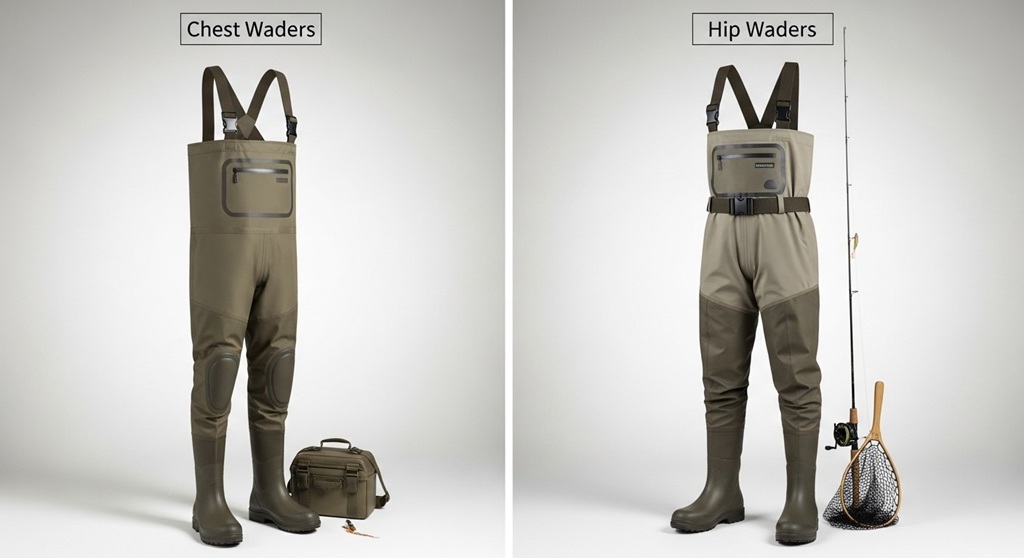
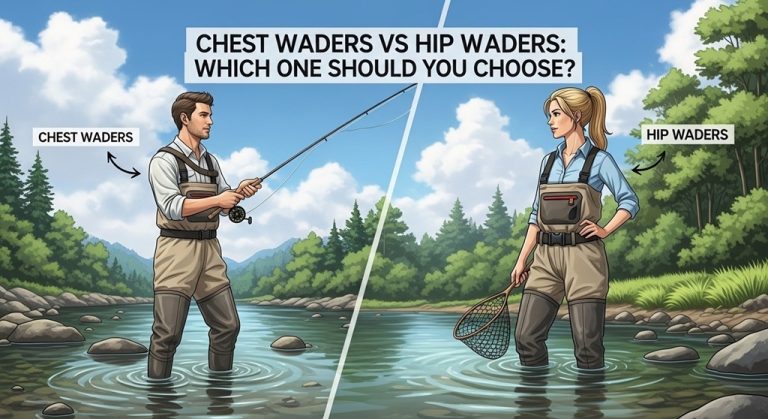
Quick Answer: Chest waders cover the body from the feet up to the chest, while hip waders extend only to the upper thigh or hip. The difference affects how deep you can safely wade into water.
Waders are waterproof garments designed to keep anglers dry when entering water. They are usually made from materials such as neoprene, rubber, or breathable nylon fabrics.
Here is a simple comparison of the two main wader types:
| Feature | Chest Waders | Hip Waders |
|---|---|---|
| Coverage | Feet to chest | Feet to hips |
| Best Use | Deep rivers and lakes | Shallow streams |
| Mobility | Moderate | High mobility |
| Water Depth Access | Up to chest level | Up to thigh level |
Both options serve different fishing environments. Choosing the right gear depends on where you fish most often.
Why Does Choosing the Right Wader Type Matter?
Quick Answer: The right wader type improves comfort, safety, and access to better fishing spots.
Many anglers underestimate the importance of proper fishing gear selection. However, poor equipment choices can limit mobility, reduce safety, and make fishing sessions uncomfortable.
For example:
- Wearing hip waders in deep water can cause water overflow.
- Using chest waders in shallow creeks may feel heavy and unnecessary.
- Improper gear can reduce stability on slippery riverbeds.
A 2022 angler equipment study by the American Sportfishing Association reported that more than 63% of serious freshwater anglers use some form of waders when fishing rivers or streams.
This highlights how common and essential these tools are in modern fishing.
What Are Chest Waders Best Used For?
Quick Answer: Chest waders are best for deep water fishing environments such as rivers, lakes, and fly fishing locations.
Chest waders provide full-body lower coverage. They typically include adjustable shoulder straps and sometimes a belt for extra security.
Because of their height, anglers can safely wade deeper into water compared to hip waders.
Common Uses of Chest Waders
- Fly fishing in rivers
- Lake shoreline fishing
- Cold water environments
- Boat launching or shoreline work
- Fishing in changing water depths
Many fly fishing professionals prefer chest waders because they allow anglers to reach deeper currents where fish often gather.
In salmon or trout fishing regions, anglers frequently stand waist-deep in flowing water. Chest waders allow this without risk of water entering the garment.
Advantages of Chest Waders
- Maximum water protection
- Access to deeper fishing zones
- Better insulation in cold weather
- Versatility across fishing environments
However, they can feel warmer during summer months and slightly restrict movement compared to lighter wader types.
When Should You Choose Hip Waders?
Quick Answer: Hip waders are ideal for shallow water fishing where mobility and lightweight gear are priorities.
Hip waders extend from the feet to the upper thigh or hip. They are usually attached to a belt loop or strap that secures them to the waist.
Because they are shorter and lighter, they allow greater movement and are easier to wear for extended periods.
Typical Situations for Hip Waders
- Small streams
- Creek fishing
- Bank fishing with occasional wading
- Warm weather fishing
- Shallow water environments
Anglers who fish small trout streams often prefer hip waders because the water depth rarely exceeds knee level.
Advantages of Hip Waders
- Lightweight design
- Better airflow
- Higher mobility
- Easier to put on and remove
They are also generally more affordable compared to full chest waders.
How Do Chest Waders and Hip Waders Compare in Comfort?
Quick Answer: Hip waders provide more mobility, while chest waders offer greater protection in deeper water.
Comfort depends on the fishing conditions and environment.
Hip waders feel lighter and cooler, which makes them better for warm climates and short fishing trips.
Chest waders provide insulation and stability in colder conditions but may feel warmer during summer fishing.
Comfort Comparison Table
| Comfort Factor | Chest Waders | Hip Waders |
|---|---|---|
| Weight | Heavier | Lighter |
| Ventilation | Moderate | Higher airflow |
| Mobility | Moderate | High |
| Cold Weather Use | Excellent | Limited |
Which Wader Type Is Safer for Fishing?
Quick Answer: Chest waders are generally safer for deeper water, while hip waders are safer in shallow environments.
Safety is a critical factor when selecting fishing gear.
Hip waders can fill with water quickly if anglers step into deep sections. This may create balance problems in strong currents.
Chest waders reduce this risk by providing higher coverage.
However, chest waders should always be worn with a wading belt. The belt helps prevent water from rapidly filling the waders in case of a fall.
Many fishing safety guidelines recommend this belt for river fishing.
Which Wader Type Is Better for Beginners?
Quick Answer: Chest waders are often recommended for beginners because they provide more flexibility across different fishing environments.
New anglers may not yet know the exact water conditions they will encounter.
Chest waders allow beginners to fish both shallow and moderately deep areas without needing separate equipment.
However, if someone only fishes small creeks or irrigation channels, hip waders may be a simpler and cheaper option.
How Do Chest Waders and Hip Waders Compare in Cost?
Quick Answer: Hip waders are usually cheaper, while chest waders cost more due to additional material and coverage.
Typical price ranges in the fishing gear market are:
| Wader Type | Typical Price Range |
|---|---|
| Hip Waders | $40 – $120 |
| Chest Waders | $80 – $300+ |
Prices vary depending on materials such as neoprene or breathable fabrics.
Breathable waders tend to cost more but offer better temperature control.
Which Wader Type Should You Choose?
Quick Answer: Choose chest waders if you fish deep water or varied environments. Choose hip waders if you primarily fish shallow streams.
Here is a simple decision guide:
- Choose chest waders if:
- You fish rivers or lakes
- You need deeper water access
- You fish in cold environments
- Choose hip waders if:
- You fish shallow streams
- You want lightweight gear
- You prefer better mobility
Many experienced anglers own both types because fishing conditions change depending on location and season.
Conclusion: Chest Waders vs Hip Waders
Choosing between chest waders and hip waders comes down to fishing environment, water depth, and comfort preferences.
Chest waders offer versatility and deeper water access. They are widely used for river fishing, fly fishing, and cold water environments.
Hip waders are lighter, easier to wear, and perfect for shallow streams or short fishing sessions.
Both options are essential tools in modern fishing gear setups.
If you regularly fish different environments, investing in both wader types can give you the flexibility to adapt to changing water conditions.
Ready to upgrade your fishing setup? Evaluate where you fish most often and choose the wader type that supports your fishing style and safety.
The right gear can significantly improve both comfort and fishing success.
Frequently Asked Questions
Are chest waders better than hip waders?
Chest waders are better for deep water environments. Hip waders are better for shallow streams where mobility is more important.
Can you use hip waders in rivers?
Yes, hip waders can be used in rivers if the water depth remains below thigh level. Deeper water may cause them to fill with water.
Do chest waders keep you warmer?
Yes. Chest waders provide more insulation and body coverage, making them better for cold weather fishing.
Are breathable waders better than neoprene?
Breathable waders offer better temperature regulation and comfort during warm weather. Neoprene waders provide stronger insulation for cold water fishing.
Do beginners need chest waders?
Many beginners start with chest waders because they offer more versatility across different fishing environments.
How long do fishing waders last?
Most fishing waders last between 2 and 5 years depending on material quality, usage frequency, and maintenance.
Read More Also: 5 Tips for Metal Surface Treatments
Up Next: Why do you need a property and financial affairs LPA?





+ There are no comments
Add yours