
You just spent hours rolling and cutting beautiful fresh pasta. Now comes the tricky part: finding space to dry it. If you live in a North Carolina home with a compact kitchen—whether it’s a cozy bungalow in Raleigh, a historic house in Wilmington, or an apartment in Charlotte—you know counter space is precious. The humidity here doesn’t help either. Drying pasta improperly leads to sticky strands, wasted effort, and soggy noodles that clump together before they ever hit the boiling water. This guide shows you exactly how to dry pasta efficiently in a small NC kitchen using smart techniques, vertical storage, and the right tools—no garage or sprawling countertops required.
Why Is Drying Pasta So Challenging in a Small NC Kitchen?
Space Constraints Are the Number One Enemy
Most standard pasta drying methods require long countertops or hanging racks that span several feet. In a small kitchen, every inch of counter space is already occupied by a coffee maker, toaster, cutting boards, and cookbooks. Trying to spread out fresh spaghetti or fettuccine on baking sheets often means moving half your kitchen appliances to the dining table—which isn’t practical for daily cooking.
North Carolina Humidity Creates Sticky Noodles
North Carolina’s climate ranges from humid subtropical in the coastal plain to slightly drier in the Piedmont and mountains. Even in Asheville, summer humidity frequently exceeds 70%. Fresh pasta contains about 30% moisture. When the air is already saturated with water vapor, that moisture has nowhere to go. Your pasta stays tacky, inviting mold growth and causing strands to fuse together into an inseparable mass.
Limited Airflow in Compact Kitchens
Small kitchens often have poor ventilation. A single window or a weak range hood doesn’t move enough air to dry pasta evenly. Without adequate airflow, the surface of your pasta dries slower than the interior, leading to uneven texture and increased stickiness.
What Equipment Do You Need for Compact Pasta Drying?
Vertical Drying Racks Save Your Counter Space
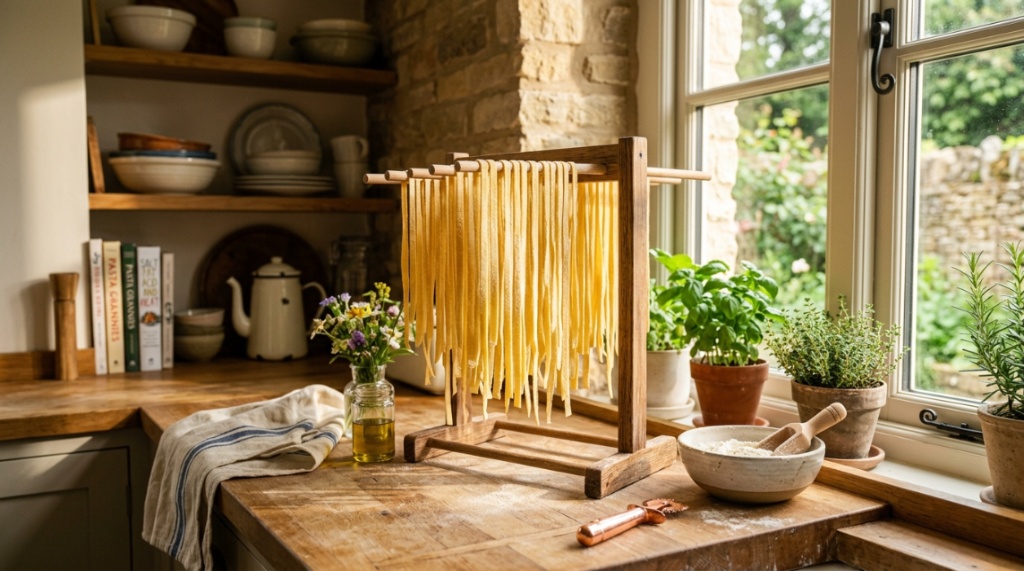
The most effective solution for small kitchens is a vertical pasta drying rack. Unlike horizontal racks that consume entire countertops, vertical models hold multiple strands without taking up much footprint. Look for bamboo racks with multiple dowels—these allow you to hang long cuts like spaghetti, linguine, or fettuccine in a compact footprint. Bamboo is naturally antimicrobial, which helps prevent mold in humid conditions.
Collapsible Drying Frames for Storage
When every cabinet inch matters, collapsible frames become indispensable. These racks fold flat for drawer storage and expand when needed. Some models attach to your countertop edge with suction cups, creating instant drying space that disappears when you’re done.
Mesh Trays for Shaped Pasta
For stuffed pasta like ravioli, tortellini, or shaped cuts like orecchiette, mesh drying trays are essential. Look for stackable designs that let you dry multiple batches vertically. The mesh allows air to circulate underneath each piece, preventing the bottoms from staying moist and sticking to the tray.
If you’re looking for a high-quality, space-saving solution, check out this guide on how to dry pasta efficiently small NC kitchen using bamboo racks that withstand humidity while fitting into tight corners.
How Do You Prepare Pasta for Drying in Tight Spaces?
Dust Every Strand with Semolina or Cornmeal
Before you even think about drying, coat your fresh pasta generously with fine semolina flour or cornmeal. This creates a physical barrier between strands, preventing them from sticking together even when stacked. Don’t use all-purpose flour—it absorbs moisture and turns gummy. Semolina stays dry and brushes off easily before cooking. Spread a thin layer on your work surface, place the cut pasta on top, then lightly toss with additional semolina.
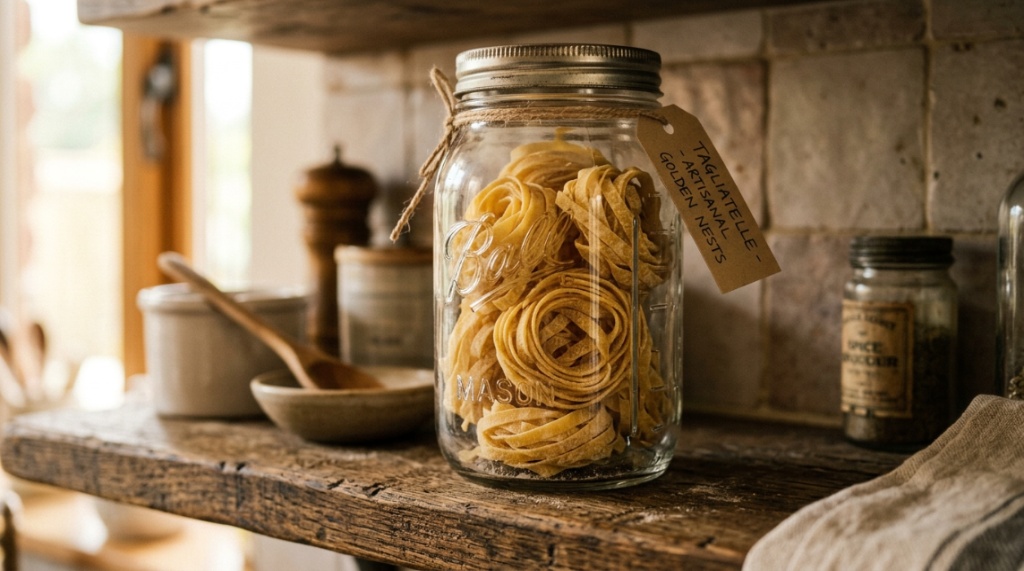
Portion Pasta into Manageable Nests
Instead of hanging long individual strands (which takes more vertical space), form small nests of pasta. Gather 3–4 ounces of long pasta into loose coils, tuck the ends under, and place each nest on a semolina-dusted tray. Nests stack neatly and dry faster because air reaches all surfaces. This technique is especially useful for kitchens where hanging racks won’t fit.
Use Pasta Drying Trees for Vertical Efficiency
Pasta drying trees are tiered wooden racks that hold multiple dowels in a vertical column. They occupy a dinner plate-sized footprint but offer 3–4 feet of drying length. Place one on your counter, a side table, or even a windowsill. The vertical design maximizes air circulation around each strand while using minimal horizontal space.
Can You Dry Pasta Without a Special Rack?
Repurpose Your Oven Racks and Cooling Grids
Yes—your oven racks double as excellent pasta drying surfaces. Remove one rack, clean it thoroughly, and place it across two supports over your sink or a roasting pan. The gaps between wires allow air to circulate from below. You can also use metal cooling racks meant for baking. Place them on baking sheets to catch any falling semolina.
Use Clothespins and a Clothes Drying Rack
If you have a compact, foldable clothes drying rack, it can moonlight as a pasta drying station. Drape clean kitchen towels over the bars, then lay semolina-dusted pasta strands on top. The towels absorb excess moisture while the rack elevates the pasta for airflow. Just ensure the towels are lint-free and freshly washed.
Hang Pasta from Cabinet Handles with Dowels
For a zero-footprint solution, place wooden dowels across the gap between two cabinet handles. Hang pasta strands over the dowels. This uses wasted vertical space above your counter. The dowels should be at least 18 inches long and smooth to avoid snagging delicate dough.
How Long Does Fresh Pasta Need to Dry in Humid NC Weather?
Drying Time Varies by Pasta Shape and Thickness
Thin pasta like angel hair or capellini dries in 30–60 minutes under normal conditions. Thicker cuts like pappardelle or fettuccine need 1–2 hours. Filled pasta like ravioli should only dry for 20–30 minutes—any longer and the filling can dry out or the edges become brittle and crack during cooking.
Adjust Drying Time Based on Humidity Levels
In coastal NC cities like Wilmington or Morehead City, expect drying times to double during summer months. A batch that dries in 45 minutes on a dry mountain day in Boone might need 90 minutes in coastal humidity. Use the touch test: pasta should feel dry to the touch, slightly leathery, and not tacky. If strands stick together when pressed, they need more time.
Use a Fan to Accelerate Drying in Humid Conditions
A small desk fan or clip-on fan directed at your pasta dramatically reduces drying time. Position the fan to create gentle airflow over the drying pasta—not directly blasting it, which can cause uneven drying or curling. Combined with a dehumidifier running in the kitchen, you can cut drying time by 30–40% even on muggy summer days.
Which Pasta Shapes Are Best for Small Space Drying?
Short Cut Pasta Is the Most Space-Efficient
Shapes like penne, farfalle, cavatappi, and macaroni dry perfectly on a single mesh tray. They don’t require hanging space and can be spread in a single layer on a stackable rack. For small kitchens, prioritize short pasta shapes—they take up less volume and dry faster because of their surface area.
Ribbon Pasta Needs Vertical Solutions
If you love fettuccine or tagliatelle, invest in a vertical rack or nesting technique. Ribbon pasta is the most challenging to dry in tight spaces because it’s long and flexible. The nesting method (coiling into small piles) works well but requires careful semolina dusting to prevent the coils from fusing.
Tubular Shapes Require Airflow Through the Center
Ziti, rigatoni, and cannelloni need airflow both inside and out. Dry these on mesh trays with the tubes oriented vertically (standing on end) or in a single layer with gaps between each piece. Avoid stacking tubular pasta—the weight of pieces on top crushes the openings and traps moisture inside.
How Can You Store Dried Pasta After It’s Ready?
Test for Complete Dryness Before Storage
Improperly stored pasta that isn’t fully dry will mold within days. Break a strand of long pasta or a piece of short pasta—it should snap cleanly, not bend. For filled pasta, press the center; it should feel firm and dry, not pliable. If any moisture remains, extend drying time.
Use Airtight Containers for Long-Term Storage
Once fully dry, store pasta in airtight glass jars or BPA-free plastic containers. Add a food-grade silica gel packet to absorb residual moisture. Label the container with the shape, date, and drying method. Homemade dry pasta stored this way lasts 2–3 months in North Carolina’s climate.
Freeze Fresh Pasta as an Alternative to Drying
If drying feels too cumbersome for your kitchen, freeze fresh pasta instead. Lay sheets or shapes on a parchment-lined baking sheet, freeze until solid (about 2 hours), then transfer to zip-top freezer bags. Frozen pasta cooks directly from frozen—no thawing needed. This bypasses drying entirely and takes minimal space.
What Are the Best Small Kitchen Tips from NC Home Cooks?
Dry Pasta Overnight in the Refrigerator
North Carolina home cooks often use the refrigerator as a drying chamber. Place semolina-dusted pasta on mesh trays in the fridge, uncovered. The cool, dry environment pulls moisture out slowly and evenly. This works especially well for filled pasta and shapes that tend to stick. Refrigerator drying takes 4–6 hours but eliminates humidity issues entirely.
Maximize Vertical Space with Tension Rods
Install a tension rod across the top of a window frame or inside a pantry. Drape pasta over the rod using clean dowels or coffee stirrers. This uses dead air space that is otherwise wasted. Tension rods don’t require drilling and hold significant weight when properly installed.
Schedule Pasta Making on Low-Humidity Days
Check weather forecasts before planning your pasta day. In NC, mornings are generally less humid than afternoons, and days after a cold front bring drier air. Winter months offer the best drying conditions statewide—take advantage of lower humidity for larger batches.
Frequently Asked Questions
Can I dry pasta on paper towels?
Paper towels are not recommended for drying pasta. They absorb moisture from the bottom but also shed lint that sticks to the pasta. The pasta often sticks to the paper towel fibers, leaving residue. Use clean kitchen towels or mesh trays instead.
How do I know if pasta is fully dry?
Fully dry pasta feels brittle and snaps cleanly when bent. It should not feel cool, soft, or pliable. For long pasta, a strand should break with a distinct snap, not bend and stretch. For short pasta, no moisture should feel present on the surface.
Is it okay to dry pasta in direct sunlight?
Direct sunlight can cause pasta to dry unevenly, with outer layers becoming brittle while the interior remains moist. Sunlight also degrades the color and flavor of egg pasta. Always dry pasta in a shaded, well-ventilated area away from direct sunlight.
Can I speed up drying with a hair dryer?
Using a hair dryer is not recommended. The concentrated heat and forceful air cause the pasta surface to dry rapidly while trapping moisture inside, leading to cracking and uneven texture. A gentle room-temperature fan is far safer and more effective.
What should I do if my pasta sticks together while drying?
If strands begin to stick, immediately separate them gently and dust with more semolina flour. For pasta that has already fused, submerge the entire clump in boiling water briefly—the strands often separate during cooking. Prevent sticking by using more semolina during the initial dusting phase.
How long can I store homemade dry pasta?
Fully dried pasta stored in airtight containers lasts 2–3 months in North Carolina’s climate. For longer storage, freeze the dried pasta. Check containers periodically for condensation or mold growth, especially during humid summer months.
Make Every Inch of Your Small Kitchen Work for Pasta
You don’t need a sprawling farmhouse kitchen to make fresh pasta at home. By using vertical racks, repurposing existing kitchen tools, and adapting to North Carolina’s humidity, you can dry pasta efficiently in a small NC kitchen without frustration. Start with short pasta shapes for immediate space savings, invest in a bamboo vertical rack for longer cuts, and always dust generously with semolina. The payoff is restaurant-quality pasta made in your own compact kitchen—no compromises required. Next time you roll out dough, try the nesting technique or refrigerator drying method, and see how much easier your pasta routine becomes.


Leave a Reply