
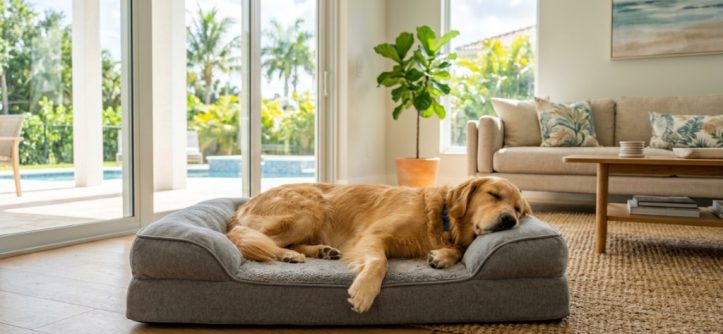
Living in Florida presents a unique set of challenges for dog owners, especially when it comes to comfort. The relentless humidity, the constant threat of fleas and ticks, and the year-round warm climate mean that a standard plush bed often falls short. If your senior dog is slowing down or your active companion is showing signs of joint stiffness, you are likely facing the overwhelming task of choosing the right support. The market is flooded with options, but not all are created equal. This guide will walk you through the specific features that matter most in the Sunshine State, helping you navigate the heat, the allergens, and the durability concerns to find the best orthopedic dog bed florida has to offer for your furry friend’s specific needs.
Why Florida’s Climate Changes the Orthopedic Bed Game
In most parts of the country, an orthopedic bed is primarily about warmth and cushioning. In Florida, the calculus is different. You are dealing with high humidity that traps odors and promotes mold, and heat that can make a thick memory foam bed feel like a furnace. Therefore, the “best” bed isn’t just about the thickest foam; it’s about the smartest combination of materials that provide joint relief without causing your dog to overheat.
The Heat Retention Problem with Memory Foam
Traditional memory foam is notorious for retaining body heat. While this is a benefit in Maine during January, it is a significant drawback in Orlando in July. A dog lying on heat-retaining foam can become restless, pant excessively, and ultimately avoid the bed altogether, negating its orthopedic benefits. When shopping, look for gel-infused memory foam or open-cell foam designs. These are engineered to dissipate heat rather than trap it, keeping the sleeping surface cooler while still providing the necessary pressure-point relief for hips and joints.
Humidity, Mold, and Odor Control
Florida’s humidity is a breeding ground for mold, mildew, and bacteria. A bed with a non-breathable, non-washable cover will quickly become a health hazard. You need a bed with a cover that is not only removable but also machine-washable and quick-drying. Look for materials like high-performance polyester or cotton blends that wick moisture away. Additionally, consider the inner foam core; some high-density foams are more resistant to moisture absorption than others, which helps prevent the dreaded “musty dog” smell that can permeate a home.
Decoding Orthopedic Foam: What Actually Works
Not all foam is created equal, and the term “orthopedic” is often used loosely in product descriptions. To make an informed decision, you need to understand the different types of support cores available and how they perform in a warm, humid environment.
High-Density vs. Egg Crate Foam
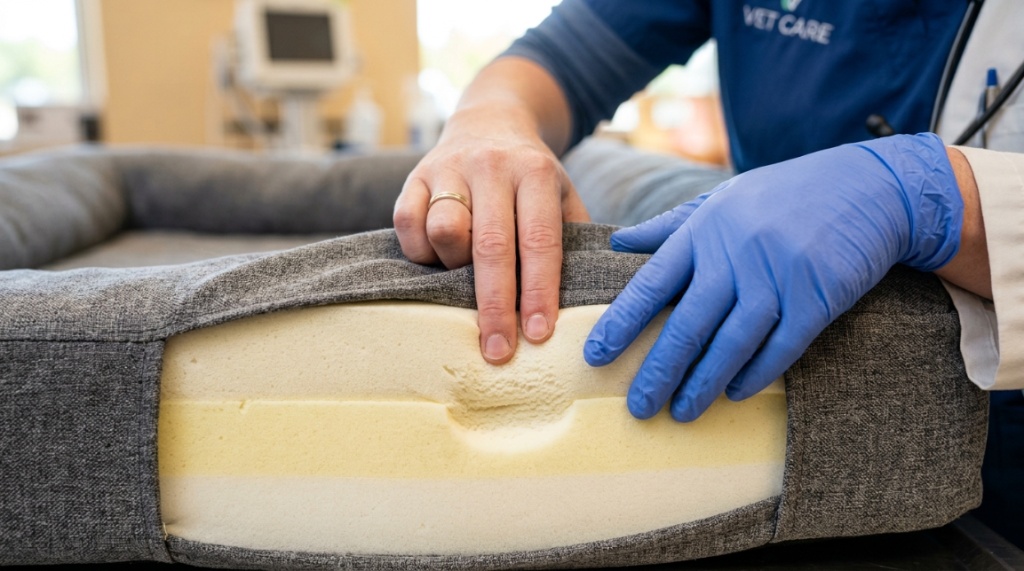
There is a massive difference between a true orthopedic bed and a cheap “egg crate” topper. Egg crate foam is thin and offers minimal support; it compresses easily and provides little to no joint relief. A true orthopedic bed uses high-density foam, typically measured in ILD (Indentation Load Deflection). A higher ILD means the foam is firmer and more supportive. For a dog with arthritis, a bed that is too soft will allow the hips to sink, exacerbating the pain. You want a base foam that is firm enough to support the dog’s weight evenly, preventing pressure sores and promoting proper spinal alignment.
Gel-Infused vs. Open-Cell Foam
For Florida residents, this is a critical distinction. Gel-infused foam has microscopic gel beads mixed into the foam to pull heat away from the body. Open-cell foam has a structure that allows air to circulate more freely through the material. Both are superior to standard memory foam for temperature regulation. If your dog is a heavy shedder or has a thick coat, a combination of both—gel-infused open-cell foam—is the gold standard for keeping them cool and comfortable,For comprehensive pet grooming care alongside joint support, use the Best Dog Ear Cleaner Wipes for Smelly Ears to keep your dog clean and fresh.
Material Matters: Choosing the Right Cover for Durability
In Florida, the cover is your first line of defense against the elements. You need a fabric that can withstand frequent washing, resist flea and tick intrusion, and stand up to the wear and tear of a dog entering and exiting the bed multiple times a day.
Waterproof and Water-Resistant Liners
Accidents happen, especially with older dogs. A waterproof liner is non-negotiable. This inner layer protects the expensive foam core from urine, drool, and spilled water bowls. Without it, moisture seeps into the foam, leading to odor and bacterial growth that is impossible to fully remove. Look for beds that explicitly state they have a waterproof inner liner, not just a water-resistant outer cover. The outer cover might repel a light splash, but only a liner will protect against a full accident.
Chew-Resistant Fabrics
While not exclusive to Florida, the heat can make dogs more restless and prone to digging or chewing at their bed to find a cooler spot. A flimsy cotton cover won’t last a week against a determined digger. Consider beds made with high-denier nylon or ballistic polyester. These materials are tough, tightly woven, and resistant to punctures and tears. They also tend to be smoother, which makes it easier to brush off sand and dirt tracked in from the beach or backyard.
Size, Shape, and Support: Matching the Bed to the Dog
Choosing the correct size is about more than just fitting the dog’s body length. It is about ensuring the foam supports the entire body, including the head and neck, without forcing the dog into an unnatural position. A bed that is too small forces the dog to curl up, which can restrict airflow and reduce the surface area for heat dissipation.
Bolster Beds vs. Flat Beds
Bolster beds (those with raised edges) provide a sense of security and a place for the dog to rest its head. However, in Florida’s heat, bolsters can trap body heat and prevent air circulation around the dog’s head. For dogs that like to stretch out to cool down, a flat, open orthopedic mattress is often a better choice. If your dog prefers to curl up, look for a bolster bed where the bolsters are removable. This gives you the flexibility to use the bed as a flat surface during the hot summer months and add the bolsters back during the rare cold snaps.
The “Goldilocks” Fit
Here is a practical rule of thumb: measure your dog from the tip of the nose to the base of the tail while they are standing. Add 6 to 12 inches to that measurement to find the ideal bed length. This extra space allows them to stretch out fully. For width, measure the dog’s shoulder width and double it. This ensures they have enough room to turn around and reposition without falling off the edge, which is crucial for dogs with limited mobility.
Maintenance and Longevity: Protecting Your Investment
An orthopedic bed is an investment, often costing significantly more than a standard pillow bed. To ensure it lasts, you must factor in the maintenance routine before you buy. The Florida environment will test the durability of your purchase, so a proactive approach is essential.
Washing and Drying Best Practices
You should wash the bed cover every one to two weeks to prevent the buildup of oils, dirt, and allergens. Always follow the manufacturer’s instructions, but generally, you should use cold water and a gentle cycle to prevent fabric wear. Avoid using fabric softeners, as they can break down the waterproof liner and reduce the fabric’s breathability. For drying, air drying is best, but if you use a dryer, use the lowest heat setting possible to prevent shrinking and damaging the waterproof backing.
Extending the Life of the Foam Core
Even with a waterproof liner, foam can degrade over time. To extend its life, rotate the bed every few weeks. This ensures even weight distribution and prevents a permanent indentation from forming in the spot your dog always lies. Additionally, if you have a dog that spends a lot of time outside, consider having a separate, cheaper outdoor bed. This prevents you from having to wash the expensive orthopedic bed every day and keeps the high-quality foam safe from the harsh UV rays and moisture of the Florida outdoors.
Frequently Asked Questions
How often should I replace an orthopedic dog bed?
Most high-quality orthopedic beds last between 2 to 4 years. If you notice the foam no longer springs back to its original shape after your dog gets up, or if you can feel the bottom of the bed through the foam when you press down, it is time for a replacement. A bed that has lost its support can do more harm than good for a dog with joint issues.
Can an orthopedic bed help with my dog’s arthritis pain?
Yes, an orthopedic bed can significantly improve your dog’s quality of life. By providing a supportive, cushioned surface, it relieves pressure on painful joints like the hips, elbows, and shoulders. This allows for better blood circulation and reduces the stiffness they feel when getting up from a hard floor.
Is a cooling gel bed the same as an orthopedic bed?
Not necessarily. A cooling gel bed focuses on temperature regulation, but it may not have the high-density foam support required for joint relief. The best option for Florida is a bed that combines both features: a high-density orthopedic foam base with a cooling gel-infused top layer or a breathable cover.
What is the best bed for a dog that chews everything?
Look for beds marketed as “chew-proof” or “indestructible,” typically made from heavy-duty ballistic nylon or canvas. However, no bed is 100% indestructible. It is crucial to supervise your dog initially and redirect chewing behavior. A chew-resistant bed gives you time to correct the habit before the bed is destroyed.
Should I buy a bed with a removable cover?
Absolutely. A removable, machine-washable cover is essential for hygiene. It allows you to easily clean away dirt, allergens, and pet hair, which is especially important in Florida’s humid climate where bacteria and odors can multiply quickly. Without a removable cover, the entire bed becomes difficult to clean and may need to be replaced sooner.
Conclusion
Finding the right orthopedic bed in Florida requires a shift in perspective. You are not just looking for a soft place to sleep; you are looking for a climate-appropriate support system that manages heat, resists moisture, and provides durable joint relief. Prioritize high-density foam for support, gel-infused or open-cell materials for cooling, and a waterproof liner with a washable cover for hygiene. By focusing on these specific features, you can ensure your dog stays comfortable, healthy, and pain-free, no matter how high the temperature or humidity climbs outside. Take the time to measure your dog and assess their sleeping habits, and you will find a bed that provides years of restful sleep and improved mobility.




Leave a Reply