

Running a business in Texas comes with its own set of challenges heat, dust, high traffic, and spaces that range from boutique storefronts in Austin to sprawling warehouses in Houston. When your floors take a daily beating, a cheap vacuum that dies in six months isn’t a bargain; it’s a headache. You need equipment that balances upfront cost with long-term reliability, and that’s harder to find than you might think. This guide breaks down exactly what to look for in a durable affordable vacuum for Texas business use, helping you avoid wasted money and downtime while keeping your commercial space genuinely clean.
Why Texas Businesses Wear Out Vacuums Faster
Before you even start comparing models, it helps to understand why your vacuum might be failing prematurely. Texas isn’t just another market it’s a unique environment for cleaning equipment.
The Dust and Allergen Load
West Texas dust, construction debris in growing suburbs, and the fine particulate matter that blows in from dry spells all take a toll. Standard residential vacuums with basic filtration will clog quickly. When filters clog, motors overheat, and that’s the number one killer of affordable vacuums. You need a machine with robust cyclonic separation or a large filter surface area to handle this load.
Heat Stress on Motors
Texas heat isn’t just uncomfortable for your staff; it affects vacuum motors. Most consumer vacuums are rated for intermittent use in climate-controlled homes. In a hot warehouse or a storefront with frequent door openings, the motor runs hotter. If the vacuum lacks proper thermal protection or a motor designed for continuous duty, it will shut down or burn out. This is a critical distinction between “cheap” and “durable.”
High-Traffic Debris Types
Your business floor isn’t collecting just dust. It’s collecting gravel from parking lots, metal shavings if you’re in light manufacturing, or heavy dirt from work boots. A vacuum with a cheap plastic impeller or a narrow hose will jam or crack. Durability here means metal agitators, reinforced hoses, and wide pathways for debris to travel through.
Key Features That Define “Durable” in a Commercial Vacuum
Durability isn’t about how heavy the machine is. It’s about specific engineering choices that prevent breakdowns. When you’re shopping for a durable affordable vacuum for Texas business operations, look for these non-negotiable components.
Motor Type and Duty Cycle
Look for “bypass” motors rather than “direct air” motors. A bypass motor cools itself with separate airflow, meaning it doesn’t rely on air passing through the fan to cool the engine. This is essential for picking up fine dust, as it prevents the motor from overheating when the filter starts to load up. Also, check the duty cycle. Commercial vacuums should be rated for continuous operation (usually 8+ hours), whereas residential units are often rated for 15-minute intervals.
Filtration System Design
In Texas, you need a sealed system. This doesn’t just mean a HEPA filter; it means the entire airflow path from the hose to the filter gasket is sealed. If air leaks out before the filter, you’re just blowing dust back into your business. Look for clamps on the lid, rubber gaskets on the motor housing, and filters that are easy to clean or replace without tools.
Chassis and Baseplate Construction
Polypropylene plastic is fine for the body, but the baseplate (where the brush roll lives) should be metal or a reinforced composite. If you bump into desks, doorframes, or shelving units which happens daily a flimsy baseplate will crack. Metal bases also dissipate heat better, extending the life of the brush roll bearings.
Comparing Vacuum Types for Business Use
Not all vacuums are suited for all businesses. The “best” choice depends on your floor type and layout. Here’s a practical breakdown of the main categories you’ll be considering.
| Vacuum Type | Best For | Durability Factor | Main Limitation |
|---|---|---|---|
| Upright (Dual-Motor) | Carpeted offices, hotels, retail with carpeted aisles | Strong agitation; brush roll is the main wear point | Hard to maneuver under low furniture; heavier |
| Canister | Hard floors, stairs, delicate areas, above-floor cleaning | Motor lasts long; hoses are the primary failure point | Requires more storage space; wand can be awkward |
| Backpack | Large areas, schools, convention centers, cleaning crews | Ergonomic; motor is lighter but often less powerful | Not ideal for deep pile carpet; battery or cord management |
| Wet/Dry Shop Vac | Warehouses, garages, construction cleanup, liquid spills | Extremely tough; no brush roll to break | Poor filtration for fine dust unless HEPA rated |
Why Dual-Motor Uprights Often Win for Mixed Use
If your business has a mix of carpet and hard floors, a dual-motor upright is often the most durable choice. One motor drives the brush roll, and a separate motor handles suction. This separation means the brush motor isn’t straining to pull air, and the suction motor isn’t bogged down by carpet resistance. This design typically lasts longer than single-motor units that try to do both jobs.
Evaluating True Affordability and Business Value
Assessing upfront price tags without analyzing long-term utility often leads to hidden operational expenses, as a lower initial investment frequently translates into premature mechanical failure and inflated replacement cycles. Calculating genuine affordability for commercial environments requires evaluating the Total Cost of Ownership factoring in projected lifespan, replacement part availability, and maintenance frequency to ensure your capital expenditure delivers maximum operational uptime. Aligning your operational equipment choices with broader digital growth initiatives further streamlines your enterprise efficiency, making it equally vital to evaluate your digital footprint by identifying which small business social media platforms are worth your time? to maximize customer reach while optimizing your overhead.
Calculate Cost Per Cleaning Hour
Take the purchase price and divide it by the estimated lifespan in hours. If a $300 vacuum lasts 500 hours, that’s $0.60 per hour. If a $500 vacuum lasts 2,000 hours, that’s $0.25 per hour. The more expensive machine is the better business investment. Look for vacuums with serviceable parts belts, brushes, and filters that you can buy separately. If a brand only sells “disposable” vacuums, walk away.
The Hidden Cost of Downtime
When your vacuum breaks, you still have to pay your cleaning staff to be there. They just can’t do their job. In Texas, where labor is competitive, you can’t afford to have staff standing around waiting for a repair. Choose a brand with local service centers or readily available parts online. Avoid obscure brands that require shipping the whole unit back to the manufacturer for a simple belt replacement.
Practical Maintenance Tips to Extend Vacuum Life
Even the most durable vacuum will fail early if it’s neglected. In a busy business, “neglect” isn’t laziness it’s usually a lack of a system. Here’s how to keep your investment running.
Daily and Weekly Checks
Implement a simple checklist. Daily: empty the bag or canister when it’s half full (don’t wait for it to be packed). Check the hose for clogs a blocked hose kills the motor faster than anything else. Weekly: inspect the brush roll for tangled hair, strings, or carpet fibers. In a business, a tangled brush roll can burn out the belt in a matter of days.
Filter Replacement Schedule
Don’t wait for the filter to look dirty. In dusty Texas conditions, washable filters should be rinsed weekly. Disposable HEPA filters should be replaced every 3-6 months depending on usage. A clogged filter reduces airflow, which makes the motor work harder and run hotter. This is the most common cause of premature motor failure in affordable vacuums.
Common Mistakes Business Owners Make
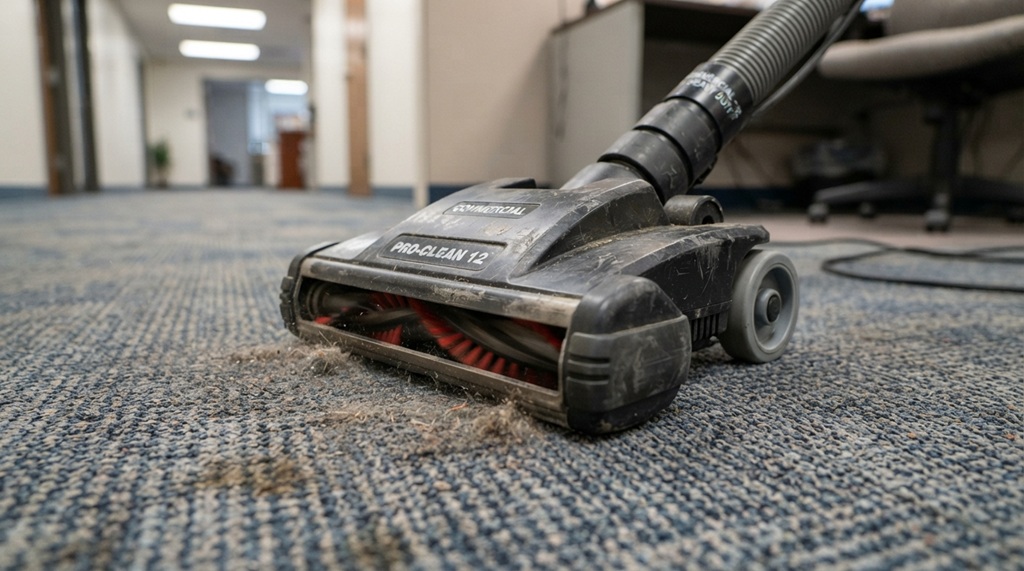
Understanding what not to do is just as important as knowing what to buy. Here are the frequent pitfalls we see with commercial vacuum purchases.
- Buying residential vacuums for commercial use: They lack the duty cycle and chassis strength. They will fail, usually right after the warranty expires.
- Ignoring the cord length: In a large Texas warehouse or retail space, a short cord means constantly unplugging and replugging. This wears out the plug and the motor from frequent restarts. Look for a 35-50 foot cord.
- Choosing suction power over agitation: For carpet, suction doesn’t remove embedded dirt. The brush roll does. A vacuum with high suction but a weak brush roll will leave carpet looking dingy and wear it out faster.
- Forgetting about noise levels: If you’re vacuuming while customers are present, a loud machine is a nuisance. Look for decibel ratings under 70 dB if noise is a concern for your business environment.
Making the Final Decision
Start by identifying your primary floor type. If it’s 80% carpet, focus on a dual-motor upright with a metal baseplate. If it’s hard floors, a canister with a hard-floor setting or a dedicated hard-floor vacuum will be more efficient. Next, check the warranty. A good commercial vacuum should have at least a 3-year warranty on the motor. Finally, buy from a dealer that stocks parts locally or has a fast shipping policy. The cheapest price online isn’t worth it if you have to wait two weeks for a filter.
When you find a model that fits your budget and has the right features, buy one and test it in your actual environment for a week. Run it during your busiest hours. See how it handles the dust and heat. If it passes that test, buy more. This practical approach ensures you’re not gambling your cleaning budget on a machine that looks good on paper but can’t handle the Texas grind.
Frequently Asked Questions
Is it worth buying a commercial vacuum for a small retail shop?
Yes, if you have carpet or high foot traffic. A commercial vacuum has a stronger motor and better filtration, which means it will pick up more dirt and last significantly longer than a residential model. For a small shop, a light-duty commercial canister or upright is a smart investment.
Can I use a shop vac for my office carpet?
Technically yes, but it’s not recommended. Shop vacs have very high airflow but low suction pressure and no brush roll. They won’t remove embedded dirt from carpet fibers, and they are often too loud for an office environment. They are better suited for hard floors and construction debris.
How often should I replace the belt on my business vacuum?
Check the belt every month. If it’s stretched, cracked, or shiny, replace it immediately. A worn belt slips, which reduces brush roll speed and generates heat that can damage the brush bearings. In high-traffic commercial use, belts may need replacement every 3-4 months.
What is the best way to handle vacuum maintenance in a multi-shift business?
Assign one person to be the “equipment manager.” They are responsible for the daily checklist, emptying the canister, and reporting any unusual noises or loss of suction. This accountability prevents small issues from becoming expensive repairs.
Are bagged vacuums more durable than bagless for business use?
Generally, yes. Bagged vacuums provide a more consistent airflow because the bag acts as a pre-filter, protecting the motor from fine dust. Bagless models require frequent emptying, which exposes the user to dust and often leads to clogs if the bin isn’t cleaned properly. For durability, bagged is usually the safer choice.
Conclusion
Choosing the right vacuum for your Texas business comes down to matching the machine to your specific environment, prioritizing motor and chassis durability over fancy features, and calculating the true cost per hour of use. Don’t be swayed by the lowest price tag or the most powerful motor on the spec sheet. Focus on sealed filtration, a bypass motor, and a metal baseplate. By investing in a machine built for continuous work and maintaining it on a strict schedule, you’ll save money in the long run and keep your business looking professional every single day. Start with a clear list of your floor types and traffic levels, and you’ll find a durable option that won’t break your budget.



Leave a Reply