
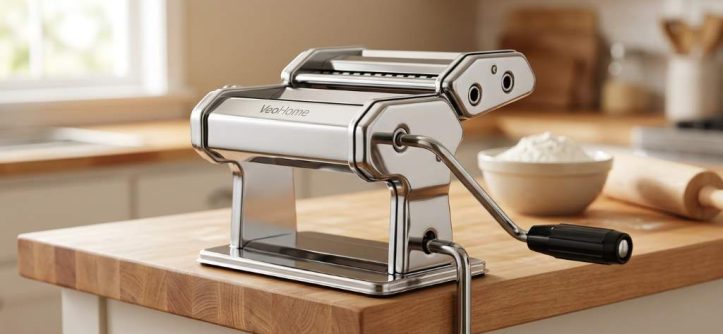
Yes, the VeoHome Manual Pasta Maker makes fresh homemade noodles surprisingly approachable for beginners. Its seven thickness settings, manual crank, and included accessories create a practical home pasta system. The machine currently carries a 4.69 out of 5 rating from 64 customer reviews. It also weighs about 2.9 kg, giving it useful countertop stability. The VeoHome pasta machine deserves attention if you want fresh pasta without electricity.
Key Takeaways
- Seven thickness settings provide useful control for different pasta styles.
- The stainless steel construction feels suited to regular home cooking.
- The manual crank gives direct control over dough during rolling.
- The included drying rack makes freshly cut pasta easier to handle.
- The ravioli maker expands the machine beyond basic noodles.
- Cleaning requires dry care because the machine is not dishwasher safe.
What Makes the VeoHome Manual Pasta Maker Different?
The VeoHome takes a straightforward approach to homemade pasta. Instead of adding motors, electronics, and complicated controls, it relies on manual rolling and cutting. Therefore, the user controls the dough throughout the entire process.
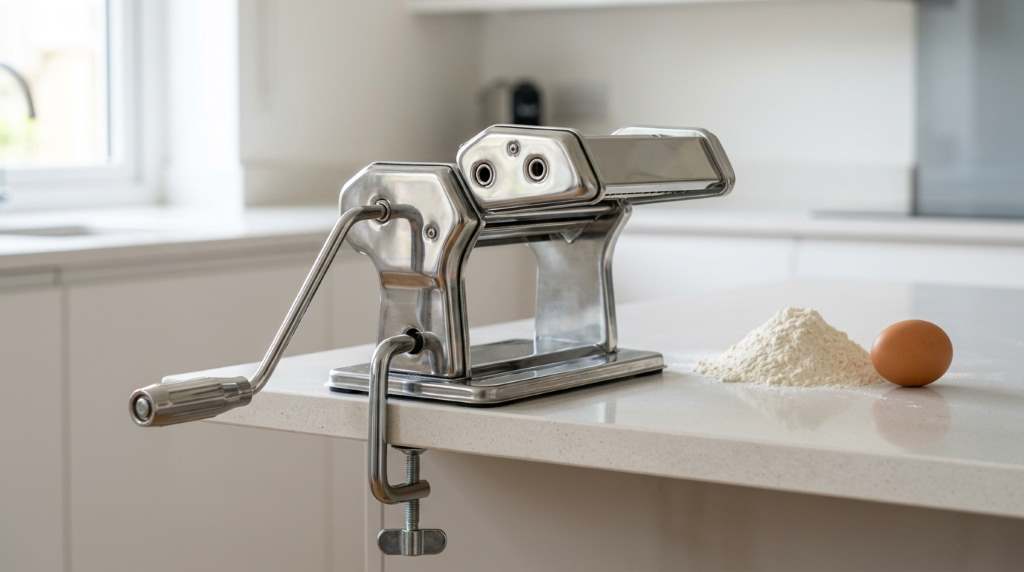
The machine uses stainless steel construction and includes a table clamp for stability. Its hand crank connects directly with the rollers, creating a traditional pasta-making experience. That setup suits cooks who prefer tactile control instead of automated operation.
Furthermore, the kit includes more than the main roller assembly. You receive a drying rack, ravioli maker, cleaning brush, hand crank, and table clamp. These additions reduce the need to purchase several separate accessories.
For comparison, many beginners focus only on the roller itself. However, the surrounding accessories often determine how convenient homemade pasta becomes. VeoHome addresses several of those practical needs within one package.
Its compact footprint also helps smaller kitchens manage storage. The listed dimensions measure approximately 21 × 21 × 16 centimeters. Meanwhile, the 2.9 kg weight provides useful substance during countertop use.
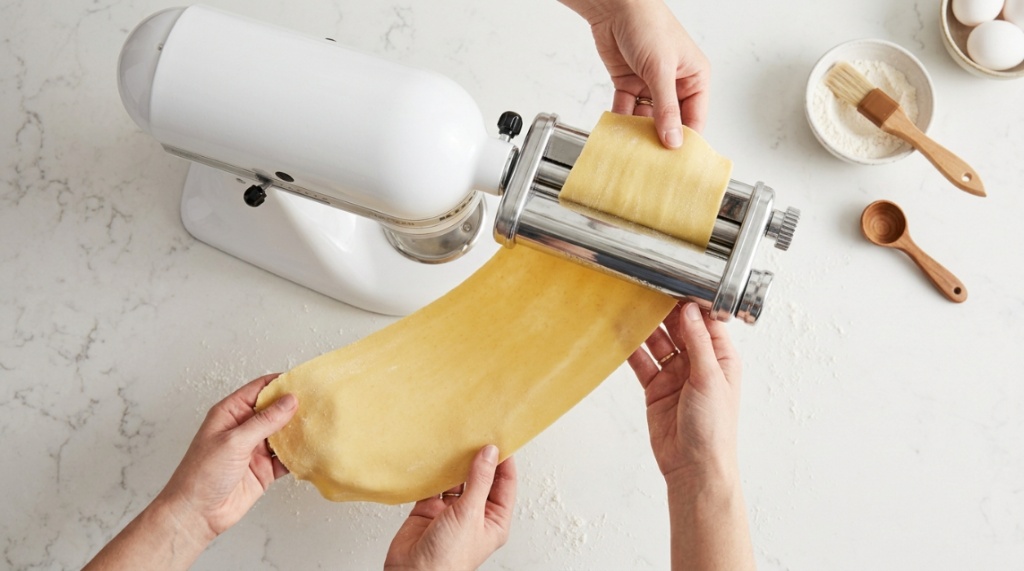
If you enjoy comparing kitchen equipment before buying, this KitchenAid attachment review offers another perspective. The key difference involves manual control versus powered convenience. Your preferred workflow should guide that choice.
VeoHome Pasta Thickness Settings Explained
Thickness control represents one of the machine’s strongest practical features. VeoHome provides seven adjustable settings for rolling pasta dough. That range lets you change the sheet thickness according to your recipe.
The widest setting works well when you begin developing the dough. Gradually reducing the setting helps create a smoother and thinner pasta sheet. Consequently, beginners can build consistency without forcing the dough through a narrow opening immediately.
VeoHome’s instructions recommend starting at level seven. You then work gradually toward thinner settings as the dough becomes smoother. This progressive method also helps develop an even sheet without excessive tearing.
For spaghetti, the manufacturer’s instructions suggest stopping around setting four. Fettuccine and lasagna sheets can use settings two or three. Ravioli and tortellini benefit from thinner sheets around setting one.
Those recommendations provide a useful starting point rather than rigid rules. Flour type, hydration, kneading, and personal texture preferences can change the ideal setting. Therefore, test small portions before rolling an entire batch.
Before cutting, keep the sheet lightly floured and work quickly. Fresh pasta can dry faster than expected after rolling. The manufacturer recommends cutting the sheet within roughly one or two minutes.
How Easy Is the VeoHome Pasta Maker to Use?
The basic process remains simple, but dough preparation determines much of the final experience. First, secure the machine firmly against a clean countertop. Then insert the crank into the roller opening before feeding the dough.
Next, begin with a properly kneaded dough ball. Good kneading develops gluten and creates the elasticity needed for springy pasta. Without adequate kneading, the cooked pasta can become soft and less structured.
After preparing the dough, divide it into manageable portions. Flatten one portion slightly before placing it through the widest roller setting. Fold and reroll the sheet several times until its texture becomes smooth and consistent.
Once the dough looks uniform, reduce the thickness gradually. Avoid rushing through multiple settings because sudden changes can stress the sheet. Instead, let each pass produce a controlled improvement.
When the sheet reaches your preferred thickness, move it toward the cutter. Install the appropriate cutting attachment and transfer the crank. Then guide the sheet steadily through the cutting rollers.
Finally, place the noodles on the drying rack or another lightly floured surface. The included rack becomes especially useful when making several portions. It keeps freshly cut pasta separated while you finish preparing the remaining dough.
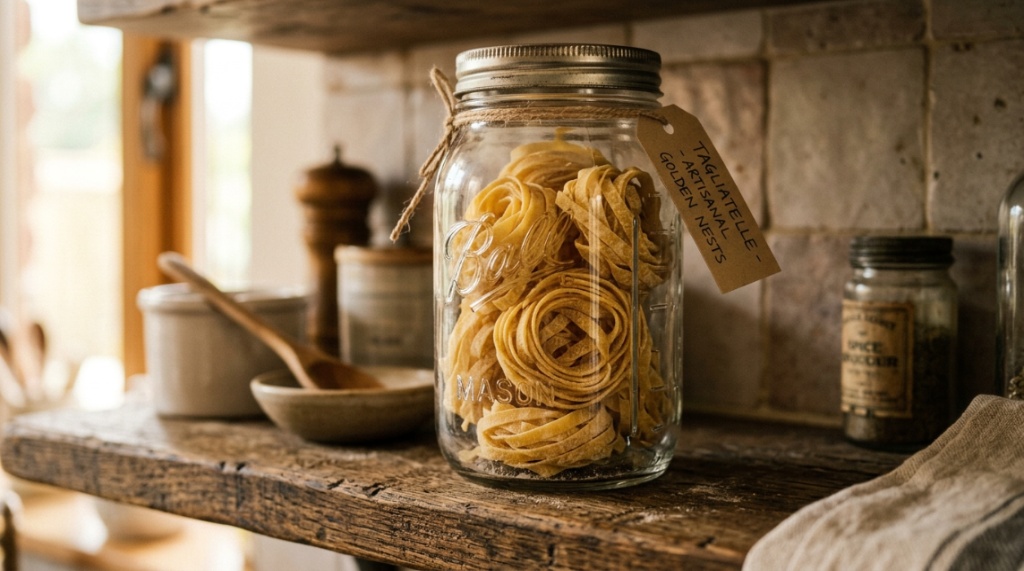
For additional pasta-handling ideas, explore these dry pasta small kitchen ideas. They can help you think about storage and preparation space. Small kitchens benefit from efficient pasta workflows.
What Pasta Can You Make With It?
The VeoHome supports several familiar pasta styles. Its roller can prepare sheets for lasagna, ravioli, tortellini, and other filled pasta. The cutters also support noodle styles such as spaghetti, fettuccine, and tagliatelle.
That versatility makes the machine more useful than a basic noodle cutter. You can prepare broad sheets for layered dishes one evening. Then, you can switch toward thinner noodles during another cooking session.
Ravioli preparation adds another dimension to the package. The included ravioli maker helps shape filled pasta without purchasing another dedicated tool. This feature can appeal strongly to cooks who enjoy making complete dishes from scratch.
However, the machine does not eliminate preparation work. You still need to mix, knead, portion, roll, cut, and cook the dough. The machine mainly simplifies the rolling and cutting stages.
That distinction matters when evaluating convenience. Fresh pasta becomes easier, but it does not become completely hands-off. Instead, VeoHome gives you better control during the most repetitive mechanical steps.
If pasta cutters sometimes frustrate you, these avoid pasta attachment jams tips provide useful handling principles. Consistent dough preparation remains essential with manual machines too.
VeoHome Manual Pasta Maker: Build Quality and Stability
The stainless steel body gives the VeoHome a substantial feel compared with lightweight plastic equipment. The manufacturer positions the machine for regular home pasta preparation. Its metal construction also complements the traditional appearance of manual pasta makers.
Stability matters because pasta dough creates resistance during rolling. A machine that shifts across the counter can make otherwise simple work frustrating. VeoHome addresses this problem with a table clamp included in the package.
The clamp should sit securely before you begin turning the crank. Check the countertop edge and tighten the clamp without forcing it excessively. A stable base lets you focus on dough thickness rather than machine movement.
The crank also gives you direct feedback while rolling. You can feel when dough becomes sticky, dry, thick, or uneven. That feedback helps experienced cooks adjust flour and pressure during preparation.
Still, manual operation demands some physical involvement. Large batches can require repeated cranking and several dough passes. Therefore, the machine suits people who enjoy hands-on cooking more than maximum automation.
Cleaning and Maintenance: What Should You Know?
Cleaning requires a slightly different mindset because the machine should not go into the dishwasher. VeoHome specifically recommends manual cleaning with dry methods. The included brush helps remove flour and dried dough from the working components.
After using the machine, allow loose flour and dough residue to become manageable. Then use the cleaning brush around the rollers and cutters. A dry cloth can handle accessible exterior surfaces without introducing unnecessary moisture.
Do not rinse the machine casually under running water. The manufacturer’s instructions specifically warn against washing the machine and accessories with water. Instead, follow the recommended dry-cleaning approach after each session.
Regular cleaning also supports smoother future sessions. Dried dough can interfere with moving components and create unnecessary mess. A few minutes of careful maintenance can prevent bigger cleaning problems later.
Storage deserves attention too. Keep the machine completely clean before placing it away. Also, store the drying rack and smaller accessories together so your next pasta session starts efficiently.
VeoHome Manual Pasta Maker Pros and Cons
Pros
- Seven thickness settings provide strong recipe flexibility.
- Manual operation requires no electricity.
- Stainless steel construction supports regular household use.
- The table clamp improves countertop stability.
- The drying rack adds practical value.
- The ravioli maker expands recipe possibilities.
- The cleaning brush simplifies dry maintenance.
Cons
- Manual cranking requires physical effort.
- The machine needs careful dry cleaning.
- Beginners still need to learn proper dough consistency.
- Large pasta batches can become time-consuming.
- The machine cannot provide fully automated preparation.
Overall, the advantages center on control, versatility, and included accessories. The disadvantages mainly involve the hands-on nature of manual pasta making. That tradeoff makes sense for cooks who value the process itself.
Who Should Buy the VeoHome Manual Pasta Maker?
The VeoHome suits beginners who want to learn traditional pasta preparation. Its multiple settings provide room to experiment without requiring separate rolling tools. The included accessories also reduce the initial equipment list.
It also suits experienced home cooks who want direct control. Manual operation lets you adjust pressure, flouring, thickness, and pacing yourself. That tactile approach can make pasta preparation more engaging.
Families may also appreciate the machine during shared cooking sessions. Children can watch the dough transform into noodles under supervision. Adults can handle the crank while younger cooks participate in preparation tasks.
However, it may not suit someone seeking maximum speed. Electric machines reduce manual effort and can automate several repetitive steps. Therefore, convenience-focused buyers may prefer powered equipment.
The VeoHome makes the strongest case for people who enjoy fresh food and hands-on cooking. It combines useful controls with practical accessories. More importantly, it avoids unnecessary complexity.
How to Get Better Results With the VeoHome
Start with dough consistency rather than blaming the machine. Sticky dough usually needs controlled flouring during rolling. Excessively dry dough can resist the rollers and produce rough sheets.
Next, work with smaller dough portions. Smaller pieces pass through the rollers more predictably. They also make thickness control easier for beginners.
Keep the dough lightly floured when necessary. However, avoid excessive flour because it can change the final dough texture. Apply only enough flour to prevent sticking.
Also, keep your pasta sheet organized after rolling. Fresh sheets can stick together quickly when left unattended. Move them promptly toward cutting or temporary drying.
Use the widest setting for initial passes. Then reduce thickness gradually rather than skipping several settings. This approach gives you better control over the final sheet.
Finally, cook fresh pasta soon after preparation whenever possible. VeoHome’s instructions recommend immediate consumption for the best result. Properly dried pasta can also support longer storage when handled correctly.
Is the VeoHome Manual Pasta Maker Worth It?
Yes, the VeoHome Manual Pasta Maker offers strong value for hands-on home cooks. Its seven settings, two cutting options, and useful accessories create a versatile package.
The biggest strength involves how much control the machine gives the cook. You decide the dough thickness, rolling pace, flouring level, and cutting timing. That control can produce better results as your technique improves.
Customer feedback also provides encouraging evidence. The manufacturer’s page currently displays 64 reviews with an average rating of 4.69 out of 5. Recent reviews frequently praise usability, completeness, and perceived build quality.
Still, buyers should understand the manual nature before purchasing. You will spend more time preparing dough than with an electric machine. That effort becomes part of the appeal if you enjoy traditional cooking.
For fresh noodles, lasagna sheets, fettuccine, and ravioli, the feature set makes sense. The machine does not promise effortless cooking. Instead, it makes the hands-on process more manageable and repeatable.
Final Verdict
The VeoHome Manual Pasta Maker is a capable choice for homemade pasta enthusiasts. Its seven thickness settings, stainless steel build, clamp, cutters, drying rack, and ravioli maker create a well-rounded setup.
Its real advantage comes from balancing simplicity with useful flexibility. You avoid electrical components while retaining meaningful control over every pasta sheet. Therefore, it works especially well for cooks who enjoy traditional preparation.
If you want fresh pasta without complicated equipment, the VeoHome deserves serious consideration. Start with small batches, follow progressive thickness settings, and keep the machine dry. With consistent dough technique, you can turn basic ingredients into fresh noodles with confidence.
Ready to make fresh pasta at home? Choose the VeoHome if you value manual control, versatility, and a complete starter setup.
Frequently Asked Questions
Is the VeoHome Manual Pasta Maker good for beginners?
Yes, its manual controls and seven thickness settings make it approachable for beginners learning pasta preparation.
How many thickness settings does the VeoHome have?
The VeoHome provides seven adjustable thickness settings for different pasta recipes.
Can the VeoHome make ravioli?
Yes, the package includes a ravioli maker alongside the pasta machine and drying rack.
Is the VeoHome pasta machine dishwasher safe?
No, the manufacturer recommends dry manual cleaning instead of washing the machine with water.
Does the VeoHome require electricity?
No, the machine uses a hand crank and operates entirely without electricity.


Leave a Reply