
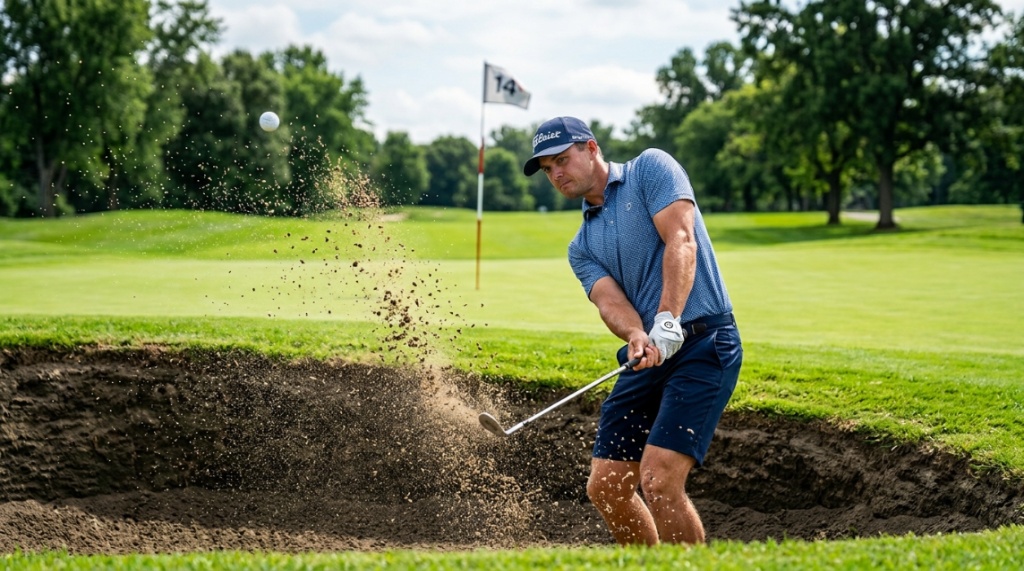
You pull your approach shot from thin mountain air, watching the ball soar a club longer than usual. Then it lands on a tight lie—hard-packed, thin grass over baked soil—and runs toward a bunker filled with damp, heavy sand. Welcome to Colorado golf. Your wedges are the most crucial clubs in your bag here, but most golfers simply use the same wedges they played at sea level. That is a critical mistake. The combination of altitude, firm turf, diverse soil types, and unpredictable wind demands a deliberate Colorado golf wedge selection that accounts for unique local conditions. Without the right grind, bounce, and loft configuration, you will struggle with inconsistent spin, poor turf interaction, and costly misses around the green. This guide gives you a practical, Colorado-specific approach to matching your wedge setup to the Rocky Mountain challenges you actually face on the course.
What Makes Wedge Selection Different in Colorado?
The Altitude Effect on Distance and Spin
At 5,280 feet in Denver, and even higher in mountain courses, the thinner air reduces drag on the golf ball. Your 100-yard wedge shot at sea level may fly 108–112 yards here. That extra distance requires you to adjust your gapping strategy. You cannot simply rely on the same stock yardages you practiced at home. Additionally, reduced air density means the ball spins less. A wedge with standard grooves may produce 500–800 fewer RPMs of spin at altitude, which changes how the ball checks up on firm greens.
Firm Turf and Thin Lies Are the Norm
Colorado fairways and approaches are notoriously firm. Even after irrigation, the underlying soil is often clay or sand-based, creating tight lies. You cannot take a deep divot like you would on lush, wet turf back east. Your wedges need to glide cleanly through the hitting zone without digging. This is where bounce angle and grind geometry become far more important than typical wedge recommendations.
Variable Sand Conditions in Bunkers
Mountain courses use different sand types—some courses have heavy, wet river sand, while others use light, fluffy quarry sand. Coupled with shallow bunker designs, your wedge must handle both extremes without bouncing into the ball or digging too deep. A single bounce setting rarely works across the state.
Which Bounce Angle Works Best for Colorado Conditions?
Low Bounce (4°–6°) for Tight Lies
A low-bounce wedge is essential for players who face hardpan or tight lies, which are common on Colorado’s munis and resort courses alike. The low flange allows the leading edge to sit close to the turf, reducing the risk of the club bouncing up and striking the ball thin. Look for a 54° or 56° wedge with 6° of bounce for chip-and-run shots from firm turf.
Mid Bounce (8°–12°) for All-Around Versatility
Mid-bounce wedges are the best option for the majority of Colorado golfers who play a mix of firm fairways, bunkers, and occasional soft rough. A 50° gap wedge with 10° bounce works well for full shots, while a 56° sand wedge with 10°–12° bounce handles most bunker shots without excessive digging. This is the safest starting point for your bag.
High Bounce (14°+) Only for Soft Conditions
High-bounce wedges have limited use in Colorado unless you play exclusively at high-altitude courses with lush bentgrass or deep, soft sand. Most golfers should avoid 14°+ bounce for general play; the wide flange will bounce off firm turf, causing thin contact and lost control.
| Bounce Range | Best For | Colorado Use |
|---|---|---|
| 4°–6° | Tight lies, hardpan, firm turf | Essential for one specialty wedge |
| 8°–12° | All-around play, bunkers, soft rough | Primary choice for most players |
| 14°+ | Soft sand, deep rough, fluffy conditions | Limited; only for specific courses |
How Does Grind Shape Affect Performance on Mountain Turf?
What Is a Grind and Why Does It Matter?
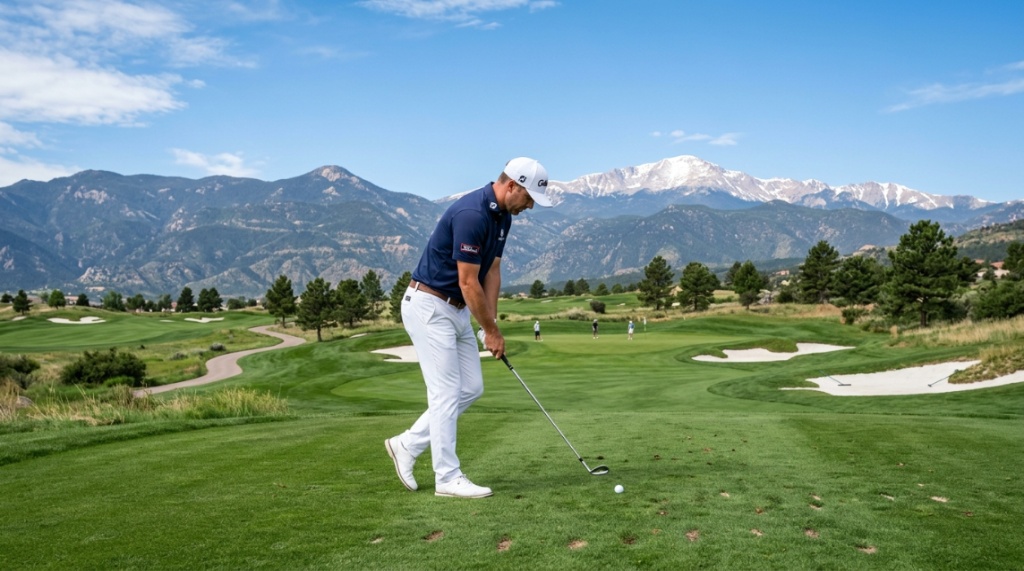
A grind refers to the material removed from the sole and heel/toe of a wedge to change how it interacts with the turf. Colorado’s firm, sloped lies demand grinds that allow the club to sit flat and slide under the ball without catching. A well-chosen grind prevents the leading edge from digging and helps you open the face without the heel lifting.
Best Grinds for Colorado’s Sloped Lies
For the typical Colorado course with sidehill and downhill lies, a C-grind or M-grind offers excellent versatility. These grinds have material removed from the heel and toe, allowing you to open the face for flop shots while still providing enough sole for square-faced pitches. Avoid full-sole grinds (like an S-grind) unless you rarely open the face. A low-bounce K-grind is also effective for players who want forgiveness on thin lies without excessive bounce.
Grind Recommendations by Wedge Loft
Your 50°–52° gap wedge should have a standard sole with minimal grind for consistent full shots. 54°–56° sand wedge benefits from a versatile grind like C-grind or M-grind for bunkers and pitches. 58°–60° lob wedge should have a low-bounce, high-toe grind to handle tight lies and maximum face opening around the greens. This combination covers the most common Colorado scenarios.
Which Loft Configuration Serves Colorado Golfers Best?
The Standard Four-Wedge Setup
Most Colorado players benefit from a 4-wedge system: pitching wedge (44°–46°), gap wedge (50°–52°), sand wedge (54°–56°), and lob wedge (58°–60°). The gap between your PW and sand wedge is critical because altitude changes your stock distances. Ensure your gap wedge carries 100–110 yards, not the 115–120 you might expect at sea level. Test your distances on a launch monitor at altitude before purchasing.
Why You Might Skip the 60° Lob Wedge
If you play courses with fast, firm greens and rarely attempt flop shots, consider dropping the 60° wedge and carrying an extra hybrid or fairway wood instead. Many Colorado munis have tight, low-cut greenside areas where a 56° wedge with a square face works as well as a 60° wedge, and it eliminates the margin for error that high-loft wedges create on thin lies. This simplifies your Colorado golf wedges selection and reduces confusing yardage gaps.
Gapping Example for Denver Courses
- Pitching Wedge (44°): 125–130 yards
- Gap Wedge (50°): 105–112 yards
- Sand Wedge (56°): 88–95 yards
- Lob Wedge (60°): 70–78 yards
These yardages assume average swing speed at Denver altitude. Adjust down by 5–8 yards for courses above 8,000 feet.
How Does Turf Type Influence Wedge Material and Finish?
Raw vs. Chrome Finish on Firm Turf
Raw (unplated) wedges offer maximum spin, which is beneficial at altitude where spin decreases. However, raw wedges rust over time, and the rust can actually increase friction on firm, dry turf. Chrome finishes last longer and reduce glare but may produce slightly less spin. For Colorado’s dry conditions, raw wedges or satin finishes provide the best combination of spin and durability. Avoid black finishes if you play in intense sun—they heat up and can affect your feel on hot days.
Shaft Selection for Altitude
The standard steel shaft works fine for most players, but consider a slightly heavier shaft (125g–130g) to maintain tempo and control on full wedge shots. The thinner air can make you swing faster subconsciously, leading to inconsistent contact. Heavier shafts promote a smoother transition and better strike on firm turf. If you prefer graphite, choose a firm flex to avoid the shaft feeling whippy in the thin air.
Groove Maintenance for Maximum Spin
Firm turf contains more sand and small rocks than lush turf. Your grooves wear down faster in Colorado, especially if you practice at ranges with sandy lies. Use a groove sharpener every 4–6 weeks during the season, and replace your wedges every 1–2 years if you play 50+ rounds annually. Dull grooves at altitude cost you 300–500 RPM of spin, which makes stopping the ball on firm greens nearly impossible.
Can You Use the Same Wedges for High-Altitude Mountain Courses and Denver Courses?
Course-Specific Adjustments
In theory, yes—but in practice, you may need compromises. Denver-area courses (5,200–5,500 feet) have slightly more air density than mountain courses at 8,000–10,000 feet. A 60° wedge with 6° bounce works great on tight Denver lies but may be useless in soft bunkers at a mountain resort. Consider carrying a 58° wedge with 8° bounce and a versatile grind as a single high-loft option that works across elevations. Test it at both altitudes before committing to a final setup.
When to Carry a Dedicated High-Bounce Wedge
If you frequently play courses like Breckenridge, Keystone, or Copper Mountain, which have soft, well-irrigated turf, pack a 56° wedge with 12°–14° bounce in your travel bag. You can swap it in for your low-bounce lob wedge when you drive up. This modular approach gives you the best of both worlds without buying an entirely new set for each elevation.
What Are the Most Common Wedge Mistakes Colorado Golfers Make?
Using Too Much Bounce
The most frequent error is buying wedges with 12°–14° bounce because a salesperson recommended it for “sand play.” Colorado’s firm bunkers and hardpan require less bounce. High bounce causes the wedge to bounce off the turf, resulting in skulled shots or fat contact. Stick to 8°–10° for your sand wedge unless you have tested higher bounce on your home course.
Ignoring Lie Angle
Colorado courses often have uneven lies due to mountain terrain. Your wedges should be 1°–2° upright if you play on severe slopes. A standard lie angle causes the toe to dig on sidehill lies, leading to pulled shots. Ask your club fitter to check your wedge lie angles at your next fitting session. This small adjustment improves contact consistency dramatically.
Neglecting Grip Condition
Firm turf and thin lies require a secure grip. Colorado’s dry climate dries out grips faster than humid regions. If your grips feel slick, replace them with a midsize or corded grip for better traction. A slippery grip leads to club rotation on impact, and on tight lies, that means thin or heel strikes almost every time.
Which Wedge Brands Work Best for Colorado Conditions?
Titleist Vokey SM10
The Vokey offers the widest range of grind and bounce options, making it the easiest brand to customize for Colorado conditions. The M-grind and L-grind are particularly effective for tight lies, while the K-grind works if you need forgiveness. The raw finish option maximizes spin at altitude,Colorado weather changes fast, especially when you are playing at higher elevations. While you are dialing in your short game equipment, make sure your apparel keeps up. Check out our review of the Budget Golf Vest That Feels Premium to stay warm on the course without sacrificing your swing mobility.
Callaway Jaws Raw
Callaway’s Jaws Raw wedges feature aggressive grooves that produce excellent spin even on thin, dry lies. The 56° with 10° bounce and C-grind is a top choice for all-around Colorado play. The raw face rusts quickly, which many players find improves feel on firm turf.
TaylorMade MG4
The MG4 offers a low-bounce option (6°) ideal for hardpan and a high-toe grind that is helpful for flop shots from tight lies. The compact head shape works well for players who prefer a classic look at address. Consider the 58° model with 8° bounce for versatility across elevations.
Cleveland CBX 4 ZipCore
For game-improvement players, the CBX 4 provides cavity-back forgiveness with moderate bounce options (8°–12°). The three-tier sole design helps glide through firm turf without digging. This is a solid choice for mid-handicap golfers who want consistency without adjusting to a blade wedge.
For a detailed breakdown of top wedge models that deliver exceptional value in Colorado conditions, check out this comprehensive resource on Colorado golf wedges selection. It includes pricing comparisons and user reviews from local players.
How Should You Test Wedges for Colorado Play?
Simulator Testing at Altitude
Many golf stores in Denver and Colorado Springs have launch monitors set to local pressure and elevation. Ask the fitter to simulate Denver (5,280 feet) or the altitude of your most-played course. Hit 10 shots with each wedge option, focusing on spin rate (target 8,000–10,000 RPM for full wedge shots) and descent angle (45°–50° for stopping power).
On-Course Demo Sessions
If possible, rent or borrow wedge options for a practice round at your home course. Hit from tight lies, bunkers, and slopes to evaluate turf interaction. Pay attention to how the wedge feels when you open the face—does it sit flat, or does the heel pop up? A 30-minute demo session on real Colorado turf beats an hour in a simulator.
Ask Local Players
Colorado golfers love to share insights. Join a local club or ask the pro shop staff what wedges they use and why. Many courses have demo programs that let you try wedges for a few holes. Use these opportunities to narrow down your top three options before purchasing.
Frequently Asked Questions
What bounce angle is best for Colorado firm turf?
A bounce angle between 8° and 10° is the most versatile for Colorado’s firm turf, bunkers, and tight lies. Low-bounce wedges (4°–6°) are useful for a specialty lob wedge but should not be your primary sand wedge.
Do I need a lob wedge in Colorado?
Not necessarily. If you play courses with fast greens and rarely attempt flop shots, a 56° wedge may be sufficient. A 60° wedge is helpful for high, soft shots from tight lies, but it requires precise technique on firm turf.
How does altitude affect wedge spin?
Altitude reduces air density, which lowers spin by 500–800 RPM compared to sea level. This makes it harder to stop the ball on firm greens. Choosing wedges with aggressive grooves and a raw or satin finish can help recover some spin.
Can I use the same wedges for Denver and mountain courses?
Yes, if you choose a versatile grind (like C-grind or M-grind) and moderate bounce (8°–10°). For frequent mountain play, consider a second sand wedge with higher bounce (12°–14°) for softer conditions.
Should I get 1° upright lie angles on my wedges?
If you play on severe slopes frequently, 1° upright can improve contact consistency. Standard lie angles work fine for most players on flatter courses. Have a club fitter evaluate your swing and typical lies.
How often should I replace wedges in Colorado?
Replace wedges every 1–2 years if you play 50+ rounds annually. The combination of firm turf, sand, and alkaline soil accelerates groove wear. Replace sooner if you notice a reduction in spin or inconsistent ball flight.
What is the best wedge grind for hardpan lies?
A C-grind or L-grind with low bounce (4°–6°) is best for hardpan. These grinds allow the leading edge to sit close to the turf without the sole bouncing, giving you clean contact on thin lies.



Leave a Reply