

What Are Cordless Power Tools and Why Are They Transforming Construction?
Short answer: Cordless power tools are battery-powered devices that eliminate the need for direct electrical connections, allowing greater mobility, efficiency, and safety on job sites.
The construction industry is changing fast. Tight deadlines, labor shortages, and rising costs are forcing teams to work smarter, not harder. This is where cordless power tools step in. Unlike traditional corded equipment, these tools run on rechargeable batteries, making them portable, flexible, and easier to use across different job site conditions.
Over the past decade, advancements in lithium-ion battery technology have significantly improved performance. Modern cordless tools now deliver power levels comparable to corded tools, while offering longer run times and faster charging. According to industry reports, cordless tool adoption has increased by over 35% globally in the last five years, particularly in residential and small-to-mid-scale construction projects.
This shift is not just about convenience. It is about productivity, safety, and cost savings. From drilling and cutting to fastening and demolition, battery-powered tools are redefining how work gets done on-site.
Why Are Contractors Switching from Corded to Cordless Tools?
Short answer: Contractors are switching due to improved mobility, reduced downtime, enhanced safety, and better overall efficiency.
The move from corded to cordless tools is not a trend. It is a strategic decision driven by measurable benefits. Contractors today face pressure to complete projects faster while maintaining quality. Cordless tools help meet both goals.
Key Reasons Behind the Shift
- No dependency on power outlets: Work can continue in remote or undeveloped areas.
- Reduced setup time: No need for extension cords or generators.
- Improved job site safety: Fewer tripping hazards and electrical risks.
- Higher productivity: Workers can move freely without restrictions.
For example, a mid-sized construction firm in the U.S. reported a 20% increase in workflow efficiency after transitioning to cordless tools for framing and interior finishing tasks. The reduction in setup time alone saved approximately 2 hours per day per team.
What Are the Main Battery Tools Advantages in Construction?
Short answer: Battery tools offer portability, safety, reduced noise, and increasing power output comparable to corded alternatives.
The advantages of battery tools go beyond just cutting the cord. They directly impact performance, worker comfort, and long-term cost efficiency.
Top Battery Tools Advantages
- Portability: Work anywhere without being tied to power sources.
- Lightweight design: Easier handling reduces worker fatigue.
- Low maintenance: Fewer components compared to corded systems.
- Energy efficiency: Modern batteries optimize power usage.
- Reduced noise: Ideal for indoor and residential projects.
Battery technology has evolved rapidly. Lithium-ion batteries now provide higher energy density, longer life cycles, and faster recharge times. Some premium tools can deliver up to 2,000+ charge cycles, making them cost-effective over time.
How Do Cordless vs Corded Tools Compare in Real Performance?
Short answer: Cordless tools now match or exceed corded tools in most applications, except for heavy-duty continuous operations.
One of the biggest concerns in the past was power. Corded tools were seen as more reliable for heavy-duty work. That gap is closing quickly.
| Feature | Cordless Tools | Corded Tools |
|---|---|---|
| Mobility | High | Limited |
| Power Output | Comparable (modern models) | Consistent |
| Setup Time | Minimal | High |
| Safety | Higher (no cords) | Lower (trip hazards) |
| Continuous Usage | Battery-dependent | Unlimited |
In real-world scenarios, cordless drills, impact drivers, and saws now perform at near-equal levels for most tasks. However, for heavy industrial use or continuous operation, corded tools still hold an advantage.
How Do Portable Tools Improve Job Site Productivity?
Short answer: Portable tools reduce delays, improve mobility, and allow faster task execution across multiple locations.
Time is money in construction. Portable tools eliminate many inefficiencies associated with traditional setups.
Productivity Benefits
- Faster movement between tasks
- No downtime for power access
- Improved team coordination
- Less dependency on infrastructure
For example, roofing teams using cordless nail guns report up to 30% faster installation rates compared to pneumatic systems. This is mainly due to reduced setup and mobility constraints.
Are Cordless Tools Cost-Effective in the Long Run?
Short answer: Yes, despite higher upfront costs, cordless tools save money through efficiency, reduced labor time, and lower maintenance.
Initial investment in cordless systems can be higher. However, long-term savings often outweigh the cost.
Cost Factors to Consider
- Battery replacement cycles
- Reduced labor costs
- Lower energy consumption
- Minimal repair requirements
A case study from a European construction company showed a 15% reduction in total project costs after adopting cordless systems across multiple teams. The savings came primarily from reduced labor hours and increased efficiency.
What Role Does Battery Technology Play in Modern Tools?
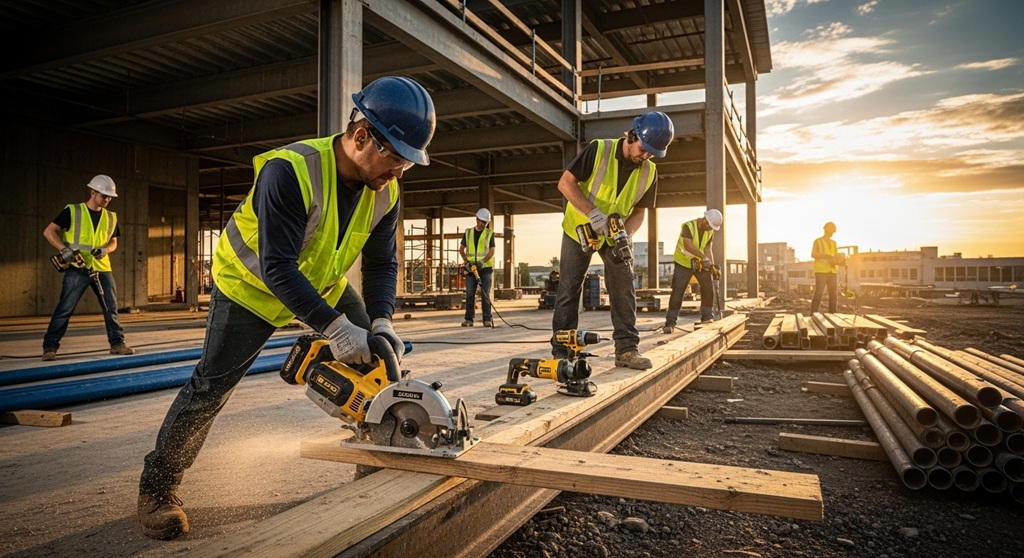
Short answer: Battery innovation drives performance, runtime, and reliability in cordless tools.
Battery technology is the backbone of cordless tools. Without it, none of these advancements would be possible.
Key Innovations
- Lithium-ion batteries: Higher efficiency and longer lifespan
- Fast charging systems: Reduced downtime
- Smart battery management: Prevents overheating and overcharging
- Interchangeable batteries: One battery fits multiple tools
Some brands now offer batteries that fully charge in under 60 minutes, allowing continuous workflow with minimal interruptions.
Are Cordless Tools Safer Than Corded Tools?
Short answer: Yes, cordless tools reduce electrical hazards and tripping risks, improving overall job site safety.
Safety is a major concern in construction. Cordless tools address several common risks.
- No exposed wires
- Reduced risk of electric shock
- Fewer trip hazards
- Better control and handling
According to workplace safety reports, trips and falls account for nearly 25% of construction injuries. Removing cords significantly reduces this risk.
What Are the Limitations of Cordless Power Tools?
Short answer: Limitations include battery life, charging time, and slightly higher upfront costs.
Despite their advantages, cordless tools are not perfect.
Common Limitations
- Battery dependency: Requires charging cycles
- Performance drop: When battery is low
- Higher initial cost
- Limited use in heavy industrial tasks
However, most of these limitations are being addressed with ongoing technological improvements.
How Will Cordless Tools Shape the Future of Construction?
Short answer: Cordless tools will become the standard, driven by innovation, sustainability, and efficiency.
The future of construction is mobile, efficient, and tech-driven. Cordless tools are at the center of this transformation.
- Integration with smart systems
- Improved battery efficiency
- Expansion into heavy-duty applications
- Greater adoption in developing markets
Industry experts predict that cordless tools will dominate over 70% of the construction tool market by 2030.
Conclusion: Are Cordless Tools the Future of Construction?
Cordless power tools are no longer optional. They are becoming essential. With clear advantages in portability, safety, and efficiency, they are reshaping how construction work is done.
While corded tools still have their place, especially in heavy-duty applications, the gap is narrowing. Battery technology continues to evolve, making cordless tools more powerful and reliable than ever before.
If you are a contractor, builder, or DIY enthusiast, now is the time to evaluate your toolkit. Investing in cordless systems can improve productivity, reduce costs, and enhance safety on every project.
Call to Action: Start upgrading your workflow today. Explore modern cordless tools and see how they can transform your efficiency on-site.
FAQs About Cordless Power Tools
Are cordless tools powerful enough for construction work?
Yes. Modern cordless tools match the performance of corded tools for most construction tasks, including drilling, cutting, and fastening.
How long do cordless tool batteries last?
Most lithium-ion batteries last between 2–5 years or up to 2,000 charge cycles, depending on usage and maintenance.
What is the biggest advantage of battery tools?
The biggest advantage is portability. Workers can operate tools anywhere without relying on power outlets.
Are cordless tools more expensive?
They have higher upfront costs but offer long-term savings through efficiency and reduced labor time.
Can cordless tools replace corded tools completely?
Not entirely. Corded tools are still preferred for heavy-duty continuous operations, but cordless tools dominate most everyday tasks.
How can I extend battery life?
Avoid overcharging, store batteries in moderate temperatures, and use manufacturer-recommended chargers.
Are cordless tools suitable for beginners?
Yes. They are easier to handle, safer, and require less setup, making them ideal for beginners.
Read More Also: How Forgiving Golf Putters Help Lower Your Score
Find out: Chest Waders vs Hip Waders: Which One Should You Choose?




Leave a Reply