
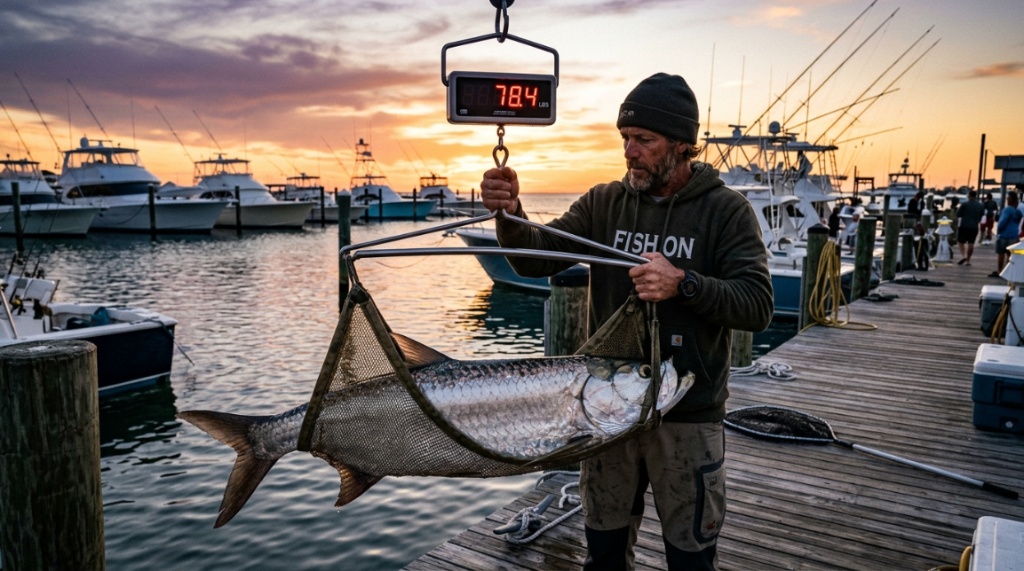
You finally hooked that monster bull red, a hefty grouper, or a trophy snook. The adrenaline is pumping, and you know it’s big. But when you reach for your fish scale, you realize it’s cheap, rusty, or only goes up to 50 pounds. We have all been there. Weighing a large saltwater fish accurately without pulling out a third mortgage to buy a commercial-grade scale—is one of the most frustrating parts of fishing. The good news? You don’t need to spend a fortune. This guide will show you exactly how to weigh trophy-class fish on a budget, focusing on practical techniques and affordable tools.
What Is the Best Budget Method for Weighing a Large Fish?
The best budget method is using a high-capacity digital crane scale (often called a hanging scale) paired with a custom-built or store-bought fish sling. This combination costs roughly $40 to $80, yet provides accuracy within 1%—a massive upgrade from flimsy hand scales. You bypass the expensive “fishing-branded” scales, which often double in price but not in quality.
Why Crane Scales Outperform Fishing Scales
Most fishing-specific scales are handheld and have a small hook. For a 40+ pound fish, this places immense strain on the jaw and the scale’s internal spring mechanism. Crane scales, on the other hand, are designed for industrial use. They have a large shackle, a heavy-duty hook, and a steel casing. The weight distribution is better, ensuring the reading is steady and accurate.
The Crucial Role of the Fish Sling
Using a metal hook directly in the gills of a large fish can tear tissue, especially if the fish is thrashing. A fish sling—a mesh or heavy-duty vinyl net—cradles the fish’s body. This distributes the weight evenly, preventing injury to the fish (important for catch-and-release) and providing a more accurate reading because the fish hangs flat. You can make one from heavy canvas and rope for under $10, or buy a commercial one.
Where to Find These Budget Scales
Don’t look in the fishing aisle. Head to the hardware section or the shipping department of your local store. A 200 kg (440 lb) crane scale is often cheaper than a 100 lb fishing scale. You can also find them easily on Amazon or at harbor freight stores for less than $30. This is the secret trick that saves you hundreds of dollars.
How Do You Ensure Accuracy Without Expensive Calibration Tools?
To ensure accuracy, you must calibrate your scale using known weights. A standard 5-gallon water jug weighs exactly 41.7 pounds when filled to the brim. By hanging this on your scale, you can verify the reading. If it’s off, most digital scales have a “calibrate” mode (usually pressing the ‘MODE’ button for 3 seconds) that allows you to reset the zero point with a known weight.
Using Water Jugs as Standard Weights
This is a reliable, foolproof method. You don’t need expensive gym weights. Fill a sturdy 5-gallon bucket with exactly 5 gallons of water. This is a precise reference point. Hang it from your scale to test multiple points. If you have two jugs, you can test 83.4 pounds. Check the scale’s response each time to ensure it is linear (accurate across the range).
Understanding the Tolerance of Budget Scales
Budget scales rarely claim better than +/- 1% accuracy. On a 100-pound fish, that is plus or minus 1 pound. This is acceptable for angler records and bragging rights. However, if you are fishing a tournament with strict rules, you may need to verify with the event’s official scale. But for 99% of anglers, a 1% variance is negligible.
The “Zero Test” to Check Drift
Before every weigh-in, test the scale with a known object. Hang the sling and push the ‘TARE’ button to zero out the sling’s weight. Then, hang a 10-pound dumbbell. If it reads 10.2, you know you have a 0.2 lb error. You can then adjust your reading mentally or recalibrate the scale immediately.
Why Is a Traditional Spring Scale a Bad Choice for Trophy Fish?
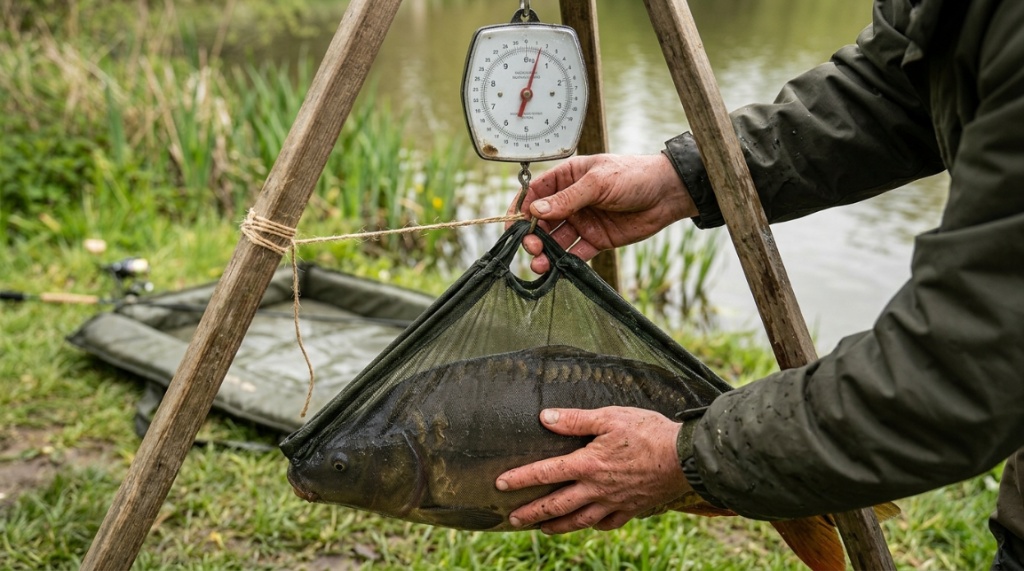
A traditional spring scale is a bad choice because the spring stretches with age and temperature changes, leading to inaccurate readings. Furthermore, holding a heavy fish with one hand while trying to read the dial is physically challenging and often leads to “choking” the fish, causing inaccurate stress readings on the spring that don’t settle.
The Problem with Dial Fatigue
Spring scales rely on a coil that stretches. Over time, the metal fatigues and loses its elasticity. This means your scale will read progressively lighter as the season goes on. A digital scale relies on a load cell (a piece of electronics) which does not have this mechanical fatigue problem. It is a precise electronic sensor.
Reading Difficulties Under Pressure
When you have a 50-pound fish swinging in the wind, you are usually trying to read the dial while also holding the fish steady. This is a two-person job. Digital scales have a hold feature that locks the weight on the screen for 10 seconds, allowing you to read it safely after the fish is removed from the pressure point,Before weighing your catch, make sure to Protect Delicate Fish with a Safe Net to minimize stress.
The Danger to the Fish
Holding a 60-pound fish by the jaw with a spring scale hook can break the fish’s jawbone. Since many large saltwater species are overfished, responsible release is critical. Using a digital scale with a sling is far less harmful, increasing the survival rate of the fish if released.
Which Type of Digital Scale Offers the Best Value?
The best value is the “Hanging Luggage Scale” with a capacity of 110 lb to 220 lb, costing between $15 and $25. These are designed for travel but function identically to fishing scales. They are compact, have a hold button, and often have a higher weight capacity than some fishing-specific devices. Combined with a sling, they are perfect.
Luggage Scales vs. Fishing Scales: The Price Gap
Fishing scales with a 100 lb capacity often cost $50 or more. Luggage scales with the same capacity cost $15. The only difference is the branding and sometimes the shape of the hook. For the budget-conscious angler, this is a no-brainer. Many “bass pros” are now recommending this hack to save money.
How to Attach a Sling to a Luggage Scale
Luggage scales typically have a small loop or standard hook. If you bought a sling with a rope, simply tie the rope to the scale hook using a secure bowline knot. If the scale has a small clip, you can use a heavy-duty carabiner rated for 200 lbs to connect the scale to the sling, ensuring the connection point is safe and secure.
Testing Features: The “Hold” Button is Essential
Look for a scale with a ‘Hold’ button. This locks the weight reading simultaneously with the fish’s weight. Most models automatically hold the reading when the weight stabilizes. This allows you to lower the fish to the deck, remove the stress, and then read the screen flat, ensuring you don’t have to squint at a swinging display.
How Do You Safely Weigh a Fish Larger Than 50 Pounds?
To safely weigh a fish over 50 pounds, you need a scale with a capacity exceeding 100 pounds and a lifting bracket. Do NOT lift the fish vertically with a single hand. Lift from your legs, using a two-hand grip or a gaff handle threaded through the scale handle to keep your back straight and protected.
Lifting Techniques to Protect Your Back
Never bend at the waist. Squat down, grab the scale handle with both hands, and stand up using your leg strength. If the fish is truly massive (over 80 lbs), consider using a “weighing bag”—a large heavy-duty bag with rope handles that you can use to lift the fish horizontally, distributing the load on both arms.
Using a Weighing Bag to Manage Heavy Loads
A weighing bag is often used in shark fishing. It is a heavy canvas bag that the fish is placed inside. The scale is attached to the bag’s handles. This allows you to place the fish on the ground or in the water, attach the scale, and then hoist the entire bag. This prevents injury and keeps the fish horizontal, which is better for its internal organs.
Post-Weigh-In Protocol for Large Fish
Immediately after the reading, lower the fish gently back into the water. Do not drop it. For pelagic fish like tuna, even a short time out of the water on a hot deck can kill them. Have your camera ready *before* you lift the fish. Splash water over the gills while you take the photo or weight measurement.
Is Investing in a Certified Scale Necessary for Record Claims?
For official IGFA (International Game Fish Association) records, yes—you must use a certified scale. However, for local tournaments and personal bests, a budget scale is sufficient. If you catch a potential world record, you will need to take the fish to an official weigh station, not rely on your portable scale.
IGFA Requirements vs. Casual Use
The IGFA requires that the scale be inspected and certified by a local government or trade organization. This is a strict protocol. For personal records, you are simply looking for truth in the weight. A budget scale provides that truth within a small tolerance, which is good enough to settle a bet or verify a personal milestone.
How to Take a Credible Photo for Verification
To prove the weight of a fish caught offshore, take a picture of the fish on the scale while the weight is clearly visible on the digital display. This is your proof. Make sure the scale is zeroed before the fish is attached and that the sling weight is tared out. This visual evidence is what most online fishing communities require to validate a catch.
Record Keeping Tips for Serious Anglers
Keep a log book with the species, length, girth, and weight. Note the scale you used and the date. This provides a history you can track for your own data and is useful if you ever want to apply for state programs that accept non-certified weights for “Master Angler” awards, which often only require a witness or photo.
Can I Make My Own Fish Scale Using Household Items?
Yes, you can use a heavy-duty luggage scale, a rope, and a large car wash bucket. You can also build a “boga grip” style scale extender, but the easiest DIY solution is modifying a hand truck or using a luggage scale with a harness. The most practical DIY involves a large wooden T-frame and a block and tackle system with a spring scale.
Building a DIY Tension Scale with a Rope
Attach a luggage scale to a carabiner. Tie a rope to the carabiner and create a loop that you can place under the fish’s gill plate and tail. This is a literal sling. This entire kit can be assembled for $20 and fits in a dry bag. This method is better than any “fishing specific” scale in the same price range.
The Limitations of a DIY Setup
DIY setups take time to set up. They are not as quick to deploy as a traditional sling, which is critical when you have a tired fish. However, if you pre-assemble the loops at home, you can quickly slip them over the fish’s head and tail. Practice makes this process efficient, but it is slower than a dedicated sling.
When the DIY Approach Fails Safety Checks
Do not use cheap luggage straps that have thin plastic clips. Ensure your rope is a rated climbing rope or a marine-grade rope. The last thing you want is a line snapping and a 50-pound hook flying back at your face. Always double-check knots. Safety should never be compromised for cost.
How Do I Maintain a Budget Scale for Saltwater Durability?
Saltwater is corrosive and will kill electronics quickly. After every use, rinse the scale thoroughly in fresh water. Then, spray it with a silicone lubricant (like WD-40) on the outside, ensuring you cover the battery compartment and the hook attachment point. Do not press buttons while the scale is covered in salt spray.
The Importance of Corrosion Resistance
Most budget scales have a zinc-alloy hook, which will rust. Once it rusts, the scale’s internal sensor can be compromised. Wipe the hook dry and coat it with a light layer of mineral oil or petroleum jelly before storage. This creates a barrier against salt and extends the life of the scale significantly.
Battery Management Tips for Longevity
Take the batteries out when you are not using the scale. Saltwater vapor can corrode the battery contacts even when the compartment is closed. By removing the batteries, you break the circuit and prevent the “ghost” draining of power and potential leakage. This is the simplest way to extend the life of your device.
Proper Storage Solutions
Keep your scale in a dry bag or a Pelican case with a silica gel pack. Do not throw it loose into a tackle box. The friction with metal lures can scratch the outer casing, which allows water to seep into the internal load cell. A dedicated hard case is a $5 investment that protects your $50 investment.
What is the Best Anchor to Weigh Against? (Practical Example)
A practical anchor for verifying your scale is a 5-gallon bucket of lead weights or a dumbbell. Since you likely don’t have access to certified weights, using a water jug is the most repeatable method. For heavy fish, verify the scale at the 40 lb mark to ensure it is reading correctly in the range you need for big fish.
Step-by-Step Calibration Check
First, fill a 5-gallon bucket with water. Second, zero the scale. Third, hook the bucket to the scale and observe the reading. It should read between 41.6 and 41.8 pounds. If it reads 42.6, you have a 1 lb error, which is not acceptable for record keeping. You must recalibrate before using it.
Comparing to a Structural Test
You can also test at a gym or post office using their certified scales. Bring your own scale and a heavy dumbbell. Weigh the dumbbell on the certified scale, then weigh it on your budget scale. Compare the results. This is a one-time check that gives you high confidence in your equipment’s reliability.
Trusting the Data
Once you know your scale is accurate to within 0.5 lbs at 50 lbs, you can trust its 100 lb reading to be accurate within 2 lbs. This is a linear relationship. This simple test provides the peace of mind necessary for a fair fight with a trophy fish. It transforms a cheap tool into a trustworthy scientific instrument.
Which Features Do You Actually Need and Which Are Gimmicks?
You need a backlit LCD screen, a tare function (zeroing), and a hold function. You do not need temperature gauges, fish species estimations, or Bluetooth connectivity. These features increase the price and provide data you can easily calculate yourself. Stick to the basics for maximum value.
Gimmicks to Avoid: Length Estimation
Some scales claim to calculate the length of the fish from its weight. This is a guess, not a measurement. Fish have different body densities depending on the catch period. Avoid paying extra for this “smart” feature—it does not work accurately. You are better off using a stitched tape measure on your deck.
Features Worth Paying For: Tare Function
The tare function is crucial. You must be able to zero out the weight of the sling or the bucket. Without it, you are estimating the extra weight. Ensure the scale can articulate the tare reset easily, even with gloves on. This is a functional necessity, not a luxury.
The Necessity of a Remote Display
For very large fish, it is often helpful to have a remote display that you can reposition. While not strictly necessary, if you fish alone, a scale with a removable screen allows you to attach the scale to a gaff and have the display aimed at you. Look for a wired or wireless remote option if you fish solo.
How Should You Prepare Before You Leave the Dock?
Before you leave the dock, test your scale. Hang a known weight (like a 5lb bag of potatoes or a dumbbell) to ensure the battery is charged and the sensor is working. Charge your batteries fully. Have a dedicated “weighing kit” with your scale, sling, and carabiner pre-assembled and ready to grab in one zipper pouch.
Creating a Pre-Trip Checklist
Check the battery, check the hook for rust, and check the sling for tears. Connect the sling to the scale and stow it in a plastic bag. This prevents you from fumbling around for three minutes while holding a giant fish that needs to go back in the water. Efficiency is the key to a successful weigh-in.
Discussing Safety with Your Crew
Before you set the lines, tell your crew where the weight scale is located and how to use it. Assign one person to handle the scale and one to handle the fish. Drops are dangerous. Clear the deck of loose lines. A quick safety brief ensures nobody gets hooked or bitten during a high-stress weigh-in procedure.
Packing the Right Accessories
Include a bottle of fresh water for rinsing the scale immediately after the trip. Pack extra AAA batteries. Keep a small tube of corrosion inhibitor. These $10 worth of accessories are cheap insurance against your $200 deal failing on the one day you need it. Always carry a backup scale in your oilskin bag.
Is It Worth Upgrading from a Spring Scale to a Digital Scale?
Yes, upgrading is worth every penny. The digital scale is more compact, more accurate, and readable. If you are serious about targeting large fish, a digital scale with a sling is non-negotiable. It is the difference between guessing a fish is 25 pounds or knowing it is 27.3 pounds.
The Myth of Spring Scale Simplicity
Many old-timers claim spring scales are “good enough.” While they were the standard, they are notoriously inaccurate when wet and cold. Digital load cells are generally unaffected by temperature and humidity. You are paying for consistency, which is vital when tracking the same species over time.
The Cost-Benefit Analysis of a Digital Upgrade
A cheap digital scale costs the same as a quality spring scale. There is no reason to buy obsolete technology. The only downside is battery dependency, but that is easily mitigated with spares. Future-proof your gear with digital.
Real-World User Experiences
Anglers who switch to digital often immediately notice the difference during the first big fight. The “click” of the hold button is reassuring. The backlit screen allows for weigh-ins at dawn and dusk. These small ergonomic increases save time and reduce stress, making the fishing experience more enjoyable and ethical.
Where Can You Find a Reliable Bulkhead for Weighing?
When you are on a pier or a bridge, you don’t need to hold the fish in your hands. You can use a “bulkhead” or a vertical pole to attach a block and tackle. For affordable saltwater fish scales, the truth is that they often perform best when hung vertically from a fixed structure. Find a sturdy railing or overhead beam.
Using a Bimini Hitch for a Temporary Hanging Point
Attach a strong rope (3/4 inch) to a high railing. Create a loop at the bottom. Attach your scale to that loop. This creates a fixed hanging point that ensures the fish is suspended level and not swinging wildly. This makes it easier to read the scale and safer for the fish.
Pier-Specific Strategies
In a pier environment, you may not have overhead clearance. In that case, use a “gangion” line—a horizontal rope with a pulley system. This allows you to lift the fish horizontally using a pulley. Although more complex, a pulley reduces the load on your arms and allows a smooth reading on the scale.
Safety with Railings
Before trusting a railing, check it for rust or rot. The load will be concentrated on a single point. Always double-check the integrity of the piling. A failed railing can send a big fish and your expensive gear crashing into the surf. Safety first, always.
Frequently Asked Questions
Can I use a bathroom scale to weigh a large fish?
Yes, but it is tricky. You can weigh yourself, then weigh yourself holding the fish, and subtract the difference. This works but is dangerous if the fish flops. Use a large bucket to hold the fish while you stand on the scale. It is reliable but cumbersome.
Are digital scales better than analog scales?
Yes. Digital scales use load cells, while analog scales use springs. Digital is more accurate, resistant to temperature changes, and typically includes a ‘hold’ feature. They are also easier to read. Analog scales can drift and become locked with rust in saltwater environments.
How often should I calibrate my fish scale?
You should calibrate your scale at the start of every season and before any significant tournament. Calibration takes less than five minutes using the water jug method. If you drop the scale, recalibrate it immediately, as the impact can shift the internal zero point.
What is a fish sling, and why is it necessary?
A fish sling is a net or fabric pouch that holds the fish horizontally. It is necessary because it distributes the fish’s weight evenly, preventing damage to the jaw and internal organs. It also makes the weighing process safer for you, as the fish is less likely to slip.
Can I leave my scale in the boat all year?
You can, but it will not last. The salt air will corrode the contacts and rust the hook. To ensure longevity, remove the scale from the boat and store it in a dry place. If you leave it aboard, place it in a sealed ammo box with desiccant packets.




Leave a Reply