
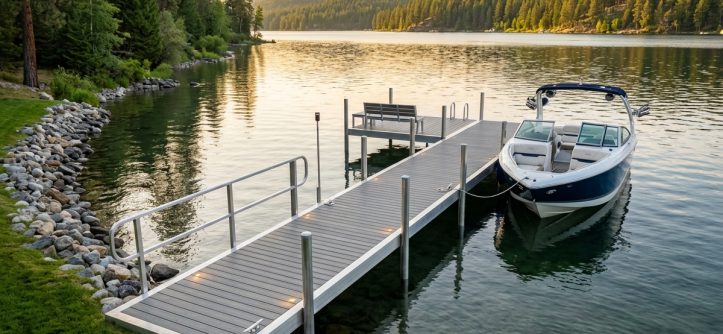
A bare shoreline has plenty of potential, but it may not offer much usable access to the water. Steep banks, shallow edges, soft ground, or a lack of clear boarding space can make boating and swimming harder than they need to be. A well-planned aluminum dock can turn that unused stretch of waterfront into a practical place for launching, relaxing, fishing, and spending time near the water.
Start With the Shoreline Before Picking a Dock
The best dock layout starts with the property itself. Water depth, shoreline slope, bottom conditions, and seasonal water changes all influence where the dock should sit.
A gradual bank may allow a simple walkway. A steep shoreline could need a longer gangway. Deep water close to shore may also point toward an aluminum floating dock rather than a heavily bottom-supported structure.
Before looking too closely at accessories, it makes sense to figure out how people will get from the yard to the water comfortably.
Use the Dock to Create a Natural Path to the Water
A dock works better when the route to it feels obvious. People should not have to step around trees, rocks, storage boxes, or steep patches just to reach the main platform.
A boat dock builder can help position ramps and gangways where the shoreline provides the safest approach. The dock itself should continue that path without forcing people through tight corners.
This becomes especially useful when the waterfront is used by children, older relatives, or guests carrying coolers and boating gear.
Give Boats Enough Room Without Taking Over the Whole Waterfront
A bare shoreline gives owners a chance to plan boat access correctly from the start. Slip width, turning room, boat length, and approach direction should all be considered before the dock footprint is finalized.
Wind and nearby boat traffic matter too. A slip may be easier to enter from one direction than another.
Owners comparing aluminum docks should think beyond basic dimensions. The dock should make the boat easier to handle while still leaving enough open space for other activities.
Create Space for More Than Just Mooring
The waterfront often becomes more useful once the dock has areas that are not dedicated to the boat.
A wider platform can create room for fishing, chairs, swimming, or getting gear ready before heading out. A clear edge with a ladder can make swimming easier. An open corner gives anglers room to cast without working around roof posts or tied boats.
Floating dock builders can also help keep these activity areas separate from busy boarding points so the dock does not feel crowded.
Match Flotation and Anchoring to the Site
The frame is only part of a floating dock system. Floats need to be arranged so the platform stays balanced as people move around. Anchoring then keeps the dock from drifting too far while allowing normal movement with the water.
The right anchoring setup depends on depth, bottom material, wind, wave action, and seasonal changes. A protected cove may need a different approach than a wide-open lake.
Good planning here can make the difference between a dock that feels steady and one that swings or twists whenever a wake passes.
Pick Materials With Everyday Maintenance in Mind
Waterfront structures see constant exposure to sun, moisture, dirt, and changing temperatures. Materials that are easier to care for can save time later.
Aluminum framing does not rot like untreated wood. Decking options also deserve a close look. Surface grip, drainage, heat in direct sun, and cleaning all affect how the dock feels in regular use.
Buyers looking at aluminum boat docks for sale should also inspect hardware and connection points. Even a low-maintenance dock still needs occasional checks around hinges, anchors, and fasteners.
Let the Dock Finish the Waterfront Without Overbuilding It
A new dock does not need to dominate the shoreline. Often, the better result comes from giving each part of the structure a clear job. The walkway handles access. The slip handles the boat. A wider section gives people room to sit, swim, or fish.
That kind of layout can make an undeveloped waterfront feel much more complete without filling every inch of shoreline.
For property owners starting with a blank stretch of water, Flotation Systems Inc. can help owners plan an all-aluminum dock around the shoreline they already have. Options include fixed or floating layouts, decking, anchoring, ramps, gangways, and different slip setups. The idea is simple: make the dock fit the property, not the other way around.



Leave a Reply